
You vacuumed yesterday. So why does your living room already look like a second pet moved in overnight?
Pet hair has a way of finding every fabric surface in the house — and multiplying the moment you turn your back. The good news is you don't need to clean constantly to keep it under control; you need a strategy that matches the right tool to the right surface. Here's a simple, room-by-room approach that actually works with how pet hair behaves, instead of fighting it everywhere at once.

📋 What You'll Find In This Guide
Living Room & Sofa
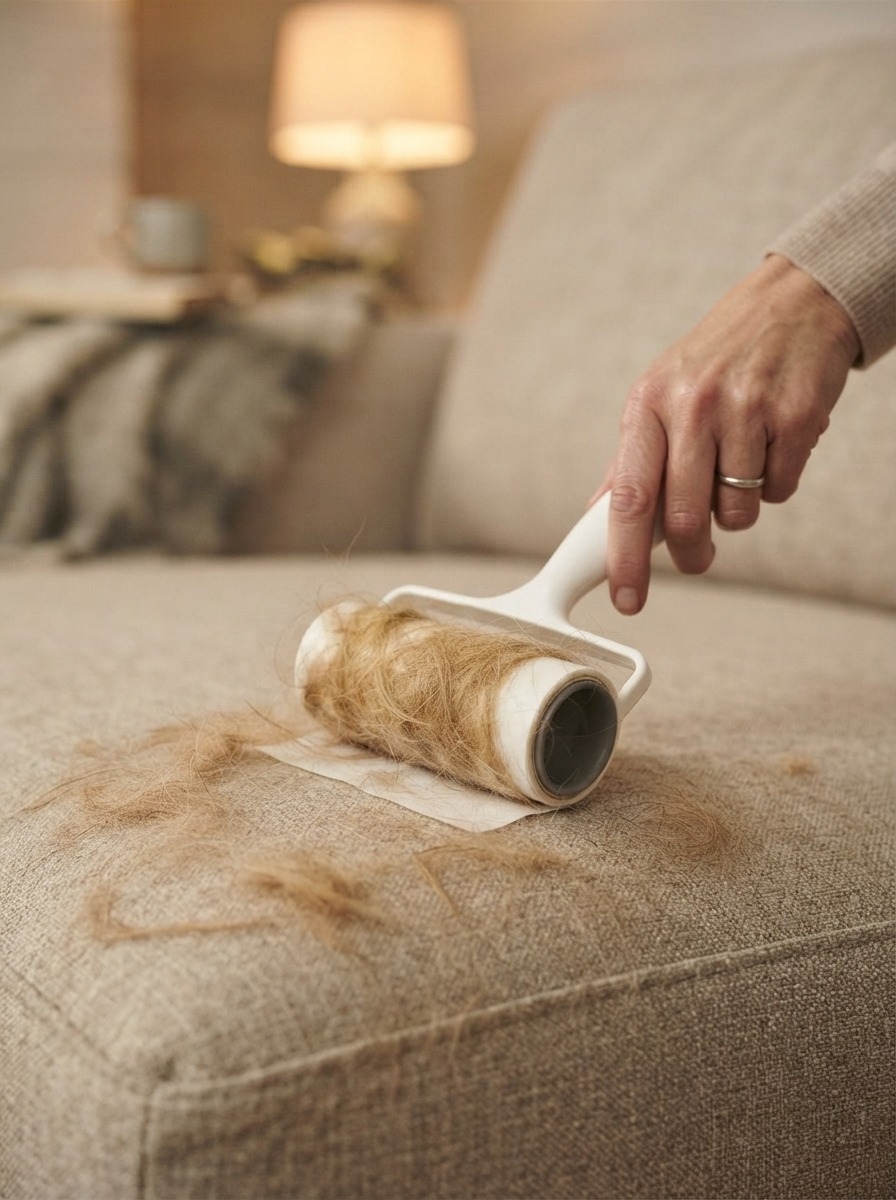
The sofa is usually ground zero — soft upholstery grips shedding hair like velcro, especially in the fabric weave of cushions and throw pillows.
- A rubber-bristle pet hair brush lifts embedded hair better than a vacuum attachment alone on upholstery
- Lint rollers work well for a quick touch-up before guests arrive, though they lose stickiness fast on heavily-shed fabric
- Damp rubber gloves, rubbed across cushions, bundle loose hair into easy-to-grab clumps — a low-cost trick worth trying first
[SOFT CTA — lint removers] A reusable pet hair lint roller saves money over disposable sheets long-term — we'll link our favorite here once we've tested a few.
Floors, Room by Room
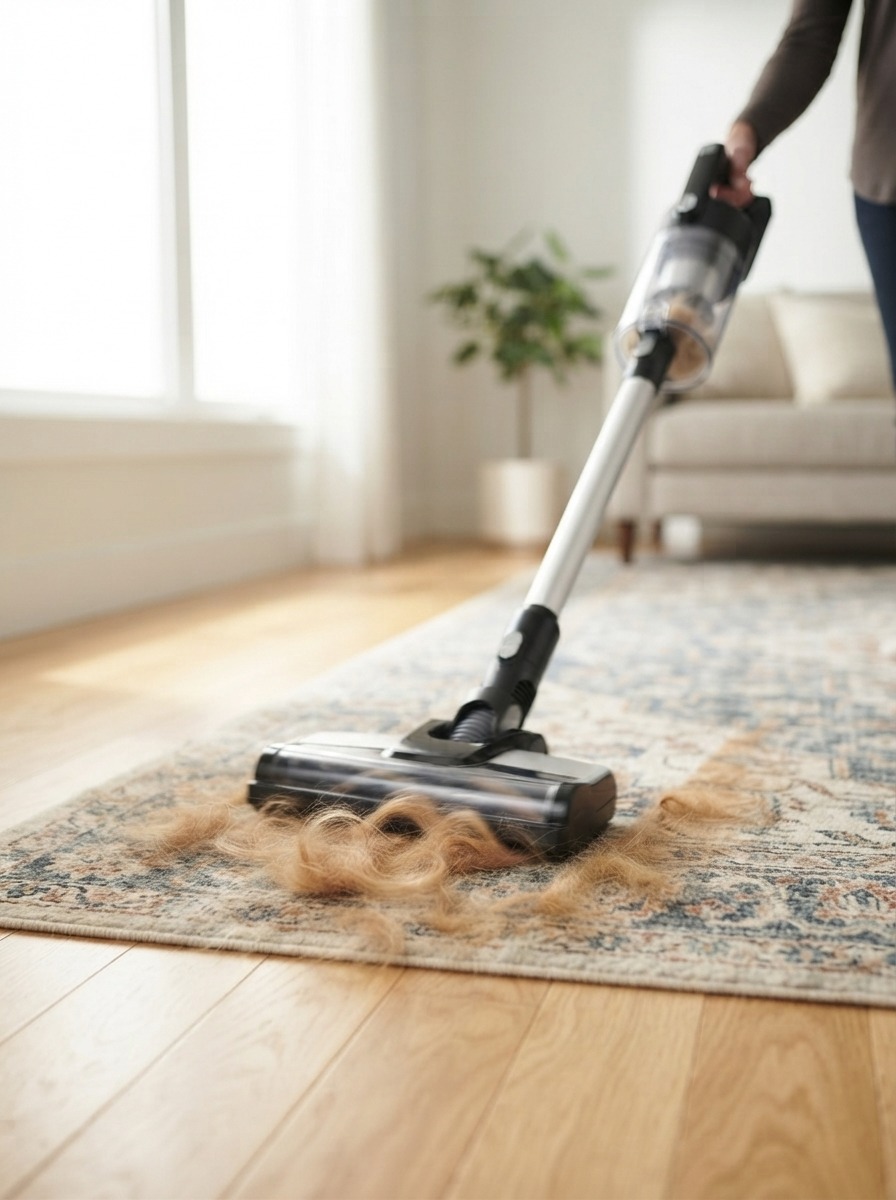
Floors need different approaches depending on the surface — what works on hardwood often struggles on carpet, and vice versa.
- Hardwood or tile: a microfiber dust mop or electrostatic sweeper catches hair before it drifts into corners; vacuum for anything already settled
- Carpet or rugs: a vacuum with a dedicated pet-hair attachment or motorized brush roll performs significantly better than a standard vacuum head
- Under furniture: hair collects fastest in low-traffic spots — a quick pass every few days prevents buildup you'd otherwise need to deep-clean later
[SOFT CTA — vacuum cleaners] A vacuum built specifically for pet hair makes a bigger difference than most people expect — we'll add our top pick here soon.
🌿 HelloOhNest Insight
Hair sticks harder to dry surfaces than damp ones. A lightly dampened microfiber cloth or mop head will often out-perform a dry vacuum pass on hardwood — the moisture helps hair release from the grain instead of just scattering it.
Bedroom
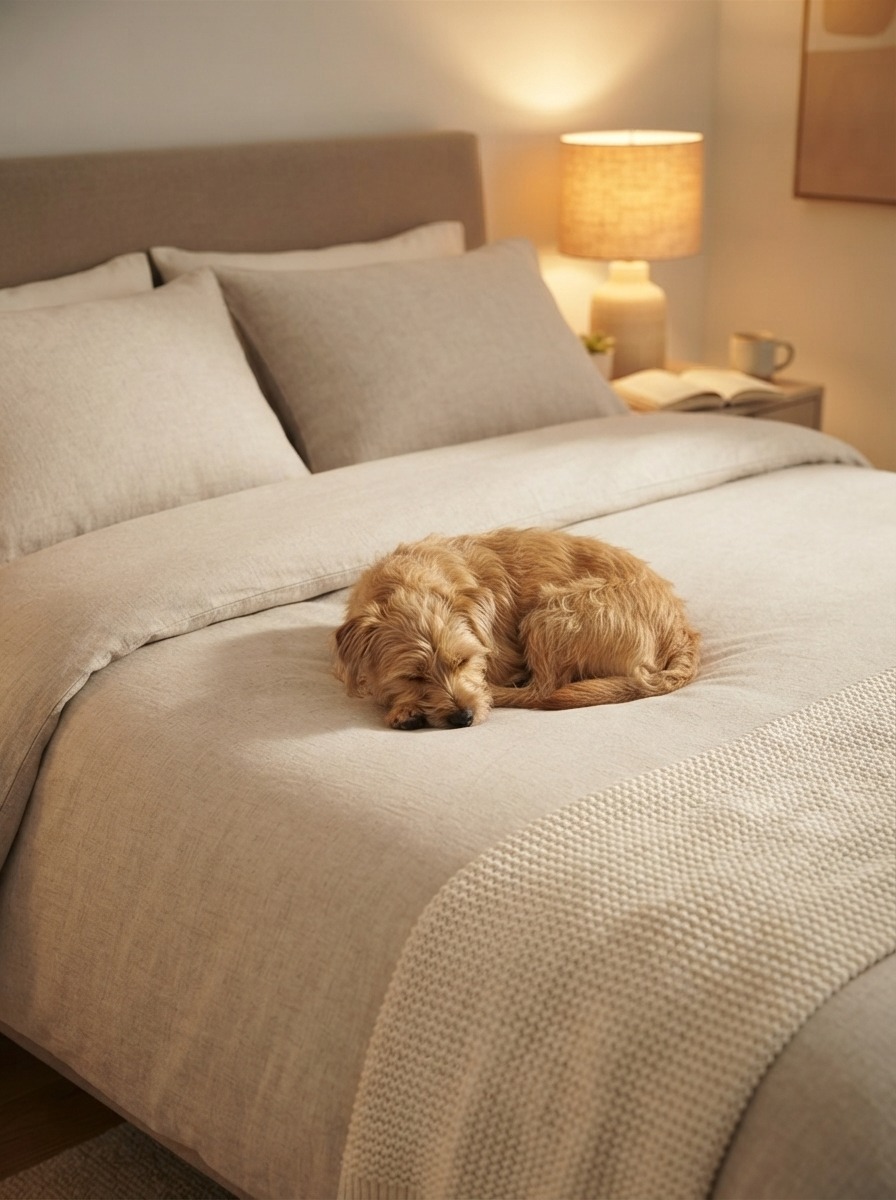
If your pet has a favorite napping spot on the bed (most do), the bedroom often needs the same attention as the living room — just on softer, harder-to-wash fabric.
- A washable, removable duvet or throw cover lets you toss hair-covered fabric straight into the laundry instead of scrubbing it in place
- Keep a small hand-held pet hair remover in a nightstand drawer for quick touch-ups before bed
- A dedicated pet blanket on their favorite spot gives them their own "hair zone" that's easy to shake out or wash separately
[SOFT CTA — washable covers] Washable, pet-friendly bedding covers turn a deep-clean chore into a quick laundry cycle — we'll share our top pick here once ready.
Clothes & Fabric
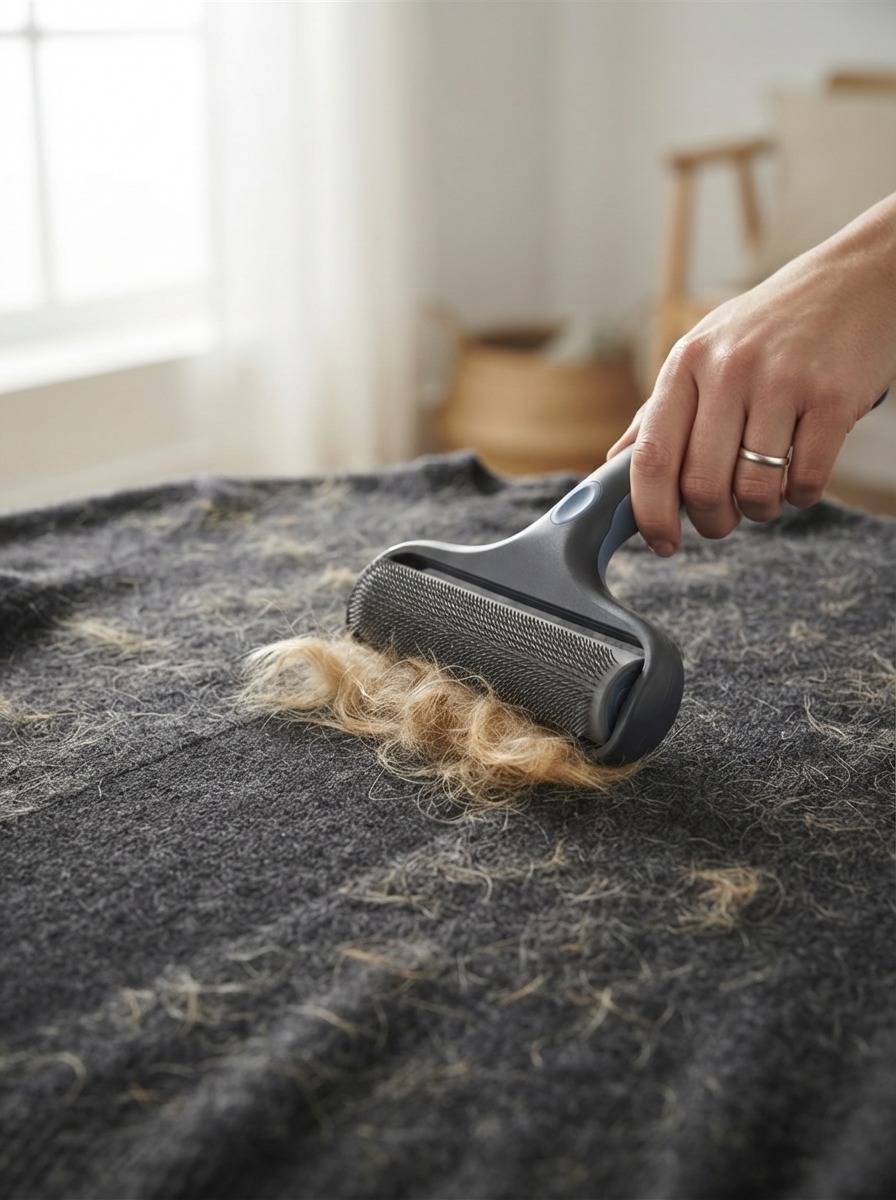
Nothing's more frustrating than walking out the door looking freshly dressed and finding fur down your sleeve halfway through the day.
- A reusable fabric pet-hair remover (the kind with directional bristles) works faster than tape rollers on knit fabrics
- Adding a dryer sheet or a few tennis balls to the dryer with your laundry loosens hair before it sets into fabric
- Keep a compact lint roller in your bag or car for last-minute touch-ups before meetings or outings
The Car
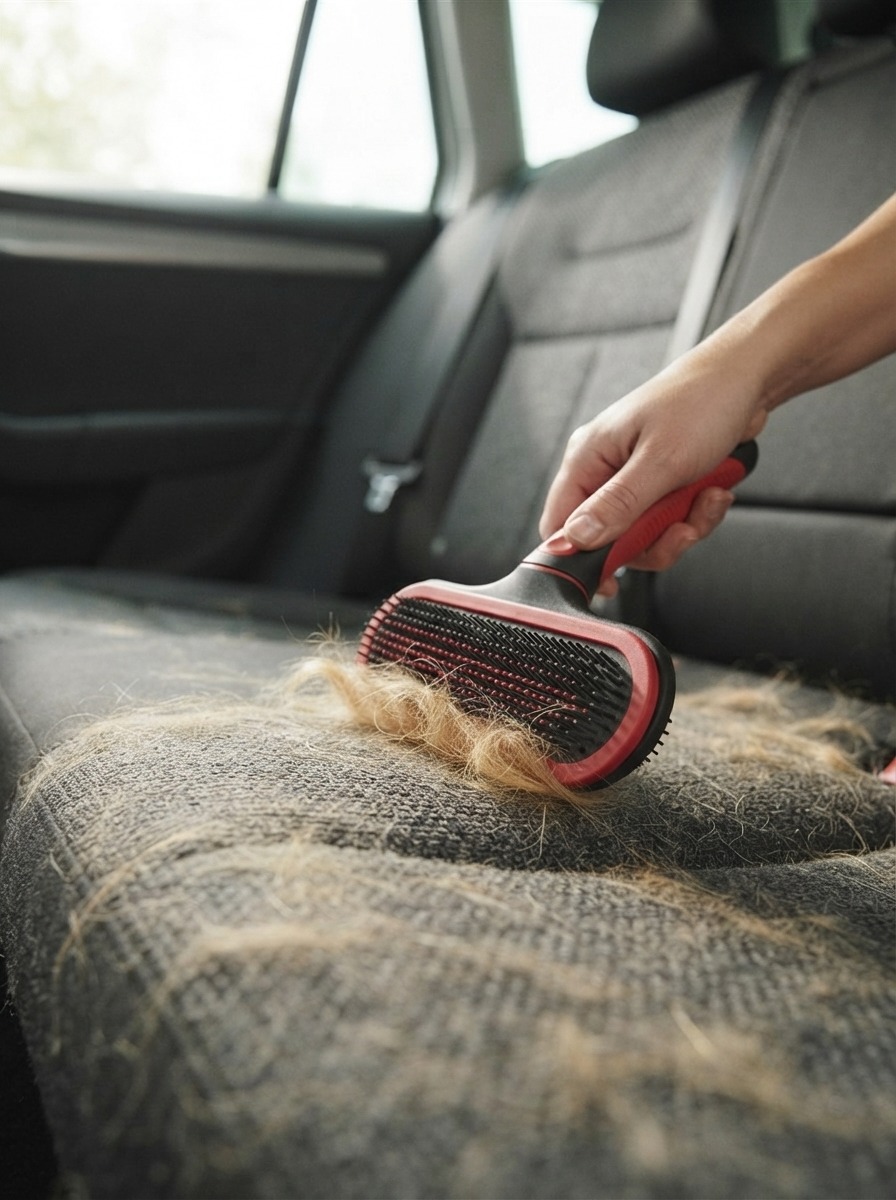
Car upholstery tends to trap hair even more stubbornly than home furniture, thanks to the tight weave of most seat fabric and constant friction from movement.
- A silicone or rubber pet-hair brush works especially well on car seat fabric where lint rollers often fail
- A portable, car-compatible vacuum handles ground-in hair better than a broom or brush alone
- A washable seat cover or hammock for the back seat protects the upholstery entirely and is far easier to clean than the seat itself
Prevention: Grooming Tools That Cut Shedding at the Source
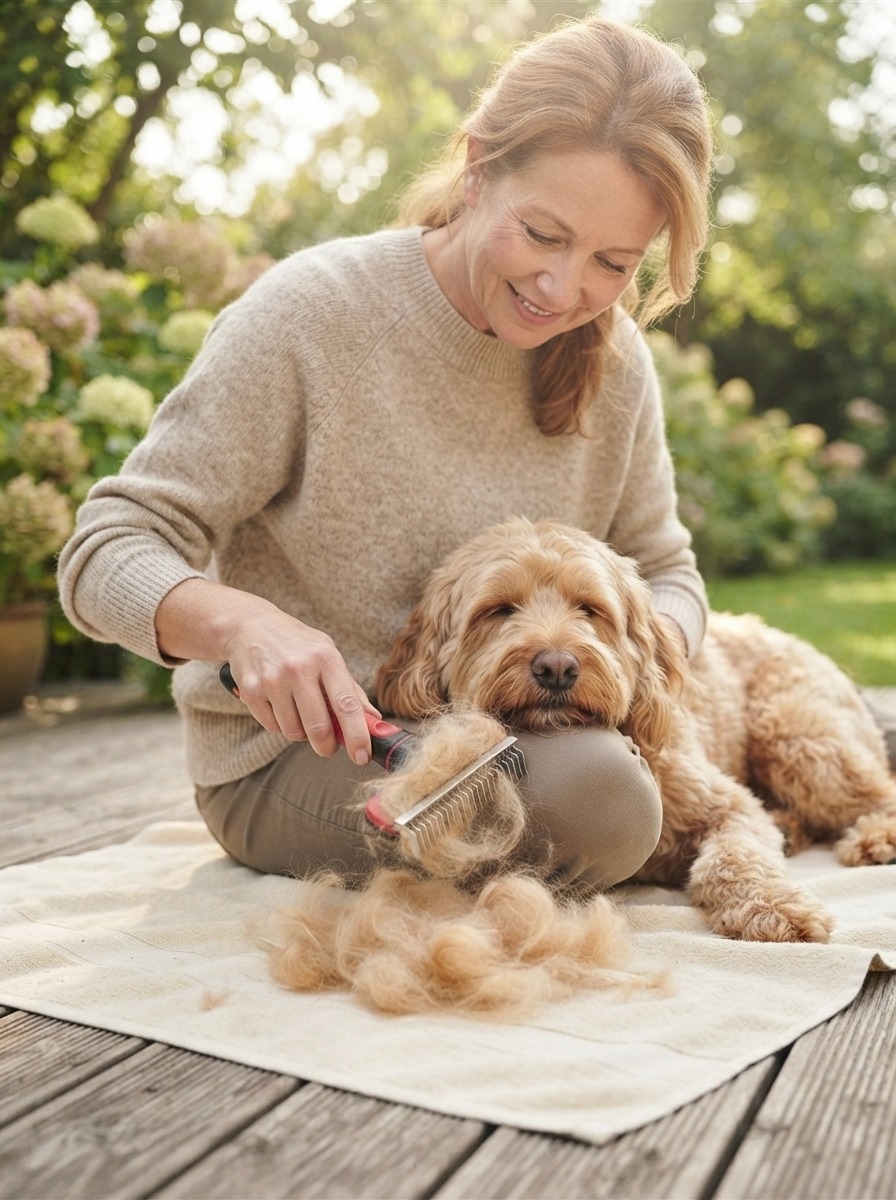
Cleaning up after shedding helps, but reducing shedding at the source makes every other step on this list easier and less frequent.
- Regular brushing with a deshedding tool (2–3 times a week for heavy shedders) removes loose undercoat before it ends up on your furniture
- Brushing outside or over a trash bin keeps the loosened hair from just relocating to the floor
- A balanced diet and regular vet checkups can also reduce excessive shedding tied to skin or nutritional issues — worth mentioning at your next visit if shedding seems unusually heavy
[SOFT CTA — grooming tools] A quality deshedding brush used consistently can cut loose hair around the house dramatically — we'll link our favorite here soon.
🌿 HelloOhNest Insight
Five minutes of brushing before your pet settles onto the sofa each evening prevents more hair than twenty minutes of vacuuming after the fact. Prevention is almost always faster than cleanup.
🛒 Ready to Build Your Cleaning Kit? — Picks Coming Soon
We're currently testing lint rollers, pet-hair vacuums, washable covers, and grooming tools to recommend the ones that actually make a difference. Check back soon, or explore our other Home Organization guides in the meantime.
Frequently Asked Questions
What actually removes pet hair best from a couch?
A rubber-bristle brush or damp rubber glove tends to outperform lint rollers on upholstery, since rubber creates friction that lifts embedded hair rather than just picking up loose surface hair.
Do robot vacuums work well for pet hair?
Many modern robot vacuums handle pet hair reasonably well on hardwood and low-pile carpet, though heavy shedders on thick carpet may still need a dedicated upright vacuum for a deeper clean periodically.
How often should I brush my pet to reduce shedding?
For heavy shedders, 2–3 times a week is a good baseline, increasing during seasonal shedding periods (spring and fall for many breeds). Light shedders may only need weekly brushing.
Is it normal for shedding to suddenly get worse?
Seasonal shedding increases are normal, but a sudden, unexplained increase outside of typical shedding season is worth mentioning to your vet, since it can occasionally point to a skin, diet, or health issue.
With love,
The HelloOhNest Team 🌿