
If your pet got hurt right now, could you find everything you need in under a minute — without digging through three different drawers?
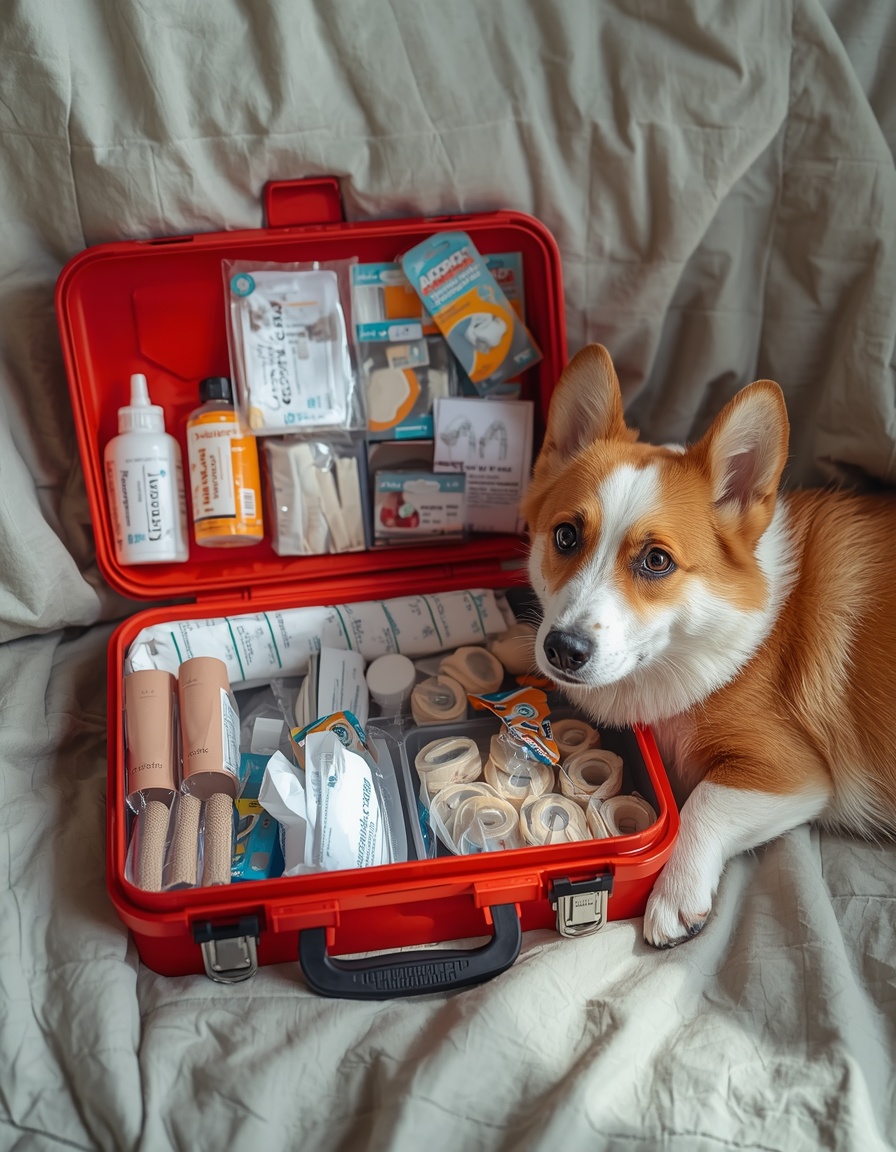
Most pet parents mean to put together an emergency kit "eventually," but life gets busy and it keeps slipping down the list. The good news is that a solid pet emergency kit doesn't need to be complicated or expensive — it just needs to be assembled calmly, once, before you actually need it. Here's a simple, no-overwhelm checklist to work through this weekend.
📋 What You'll Find In This Guide
Basic First-Aid Supplies
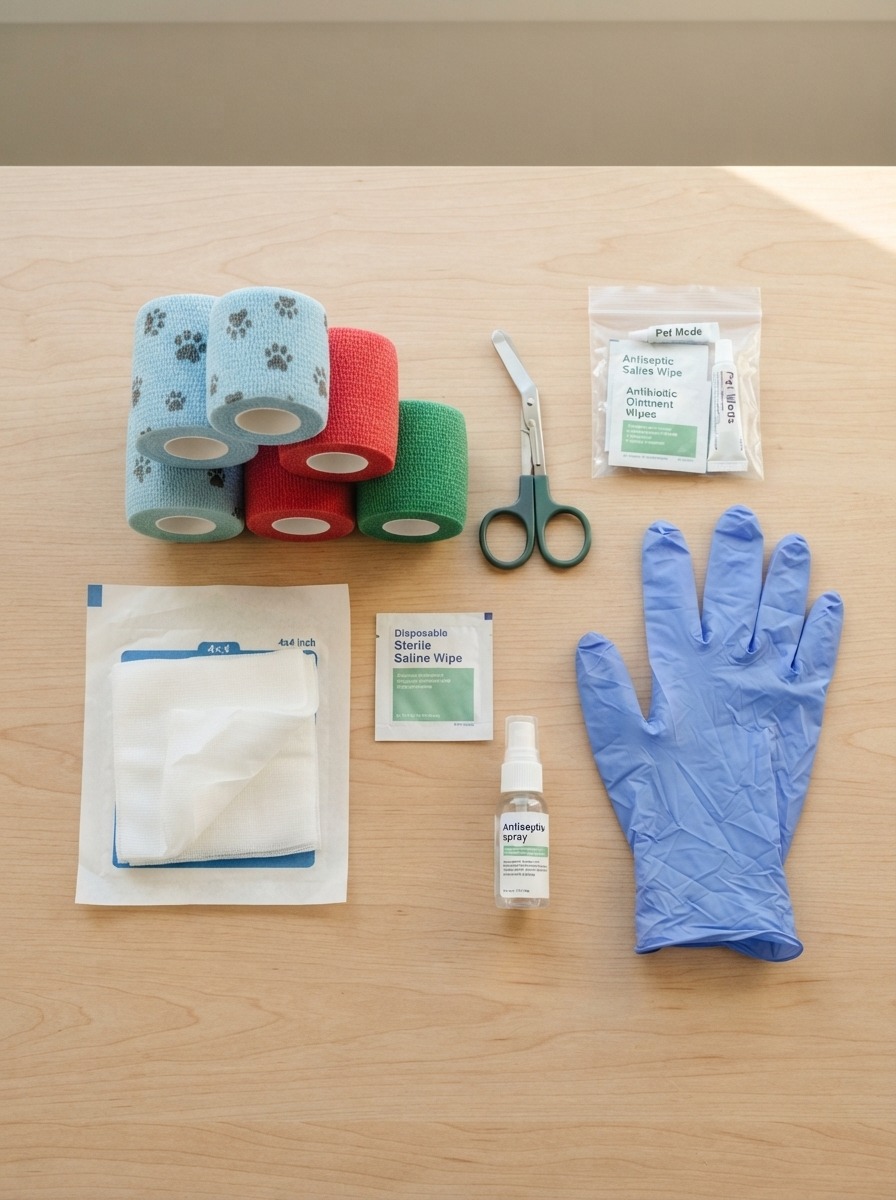
You don't need a hospital-grade supply — just enough to stabilize a minor injury or protect a wound on the way to the vet.
- Self-adhesive bandage wrap (won't stick to fur like standard tape)
- Sterile gauze pads
- Disposable gloves, to keep the area clean for both of you
- Pet-safe antiseptic wipes
- Blunt-tip scissors, for trimming fur or bandages safely
[SOFT CTA — first-aid kits] Pre-assembled pet first-aid kits exist specifically so you don't have to source each item separately — we'll link a trusted option here once we've tested a few.
A gentle reminder
This kit is meant to help you respond calmly and buy time — it isn't a substitute for veterinary care. For anything beyond a minor scrape, always follow up with your vet or an emergency animal hospital, even if your pet seems okay afterward.
Tools You'll Reach for in the Dark
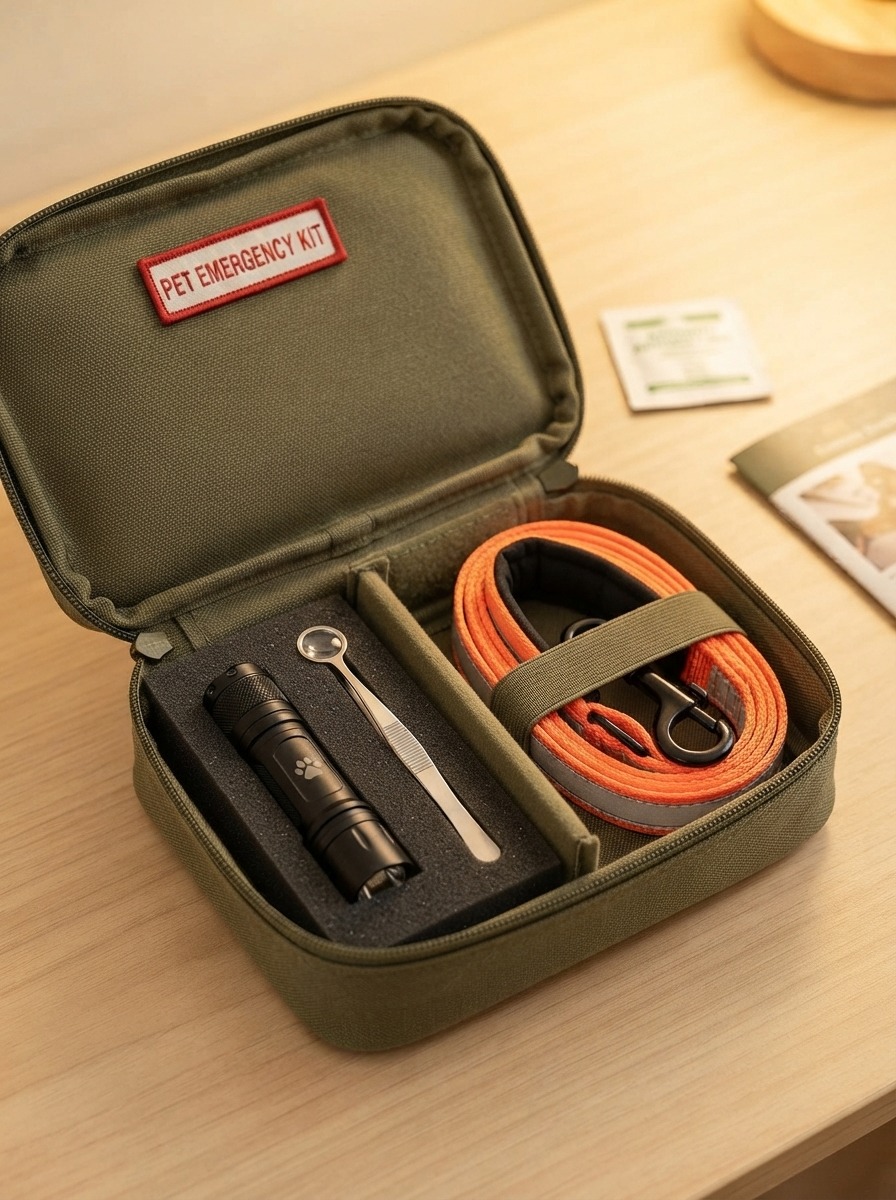
Emergencies rarely happen in perfect daylight. A few small tools make a surprising difference when you're moving fast and can't easily see.
- A reliable flashlight or headlamp with fresh batteries
- A spare leash, in case yours is misplaced in the moment
- Tweezers, for splinters, ticks, or small debris
- A digital pet thermometer, if you already know how to use one safely
Paperwork That Saves Precious Time

In a real emergency, you don't want to be searching your email for your vet's phone number or trying to remember your dog's last vaccination date. Having this ready in advance removes one entire layer of stress.
- A printed copy of vaccination records and any known allergies or conditions
- Your regular vet's phone number and address
- The nearest 24-hour emergency animal hospital's contact info, saved even if you never expect to need it
- A recent photo of your pet, in case you're ever separated during the chaos
🌿 HelloOhNest Insight
Take a photo of your paperwork folder with your phone and save it to a cloud album too. Paper can get left behind in a rush — your phone almost never does.
Comfort & Containment
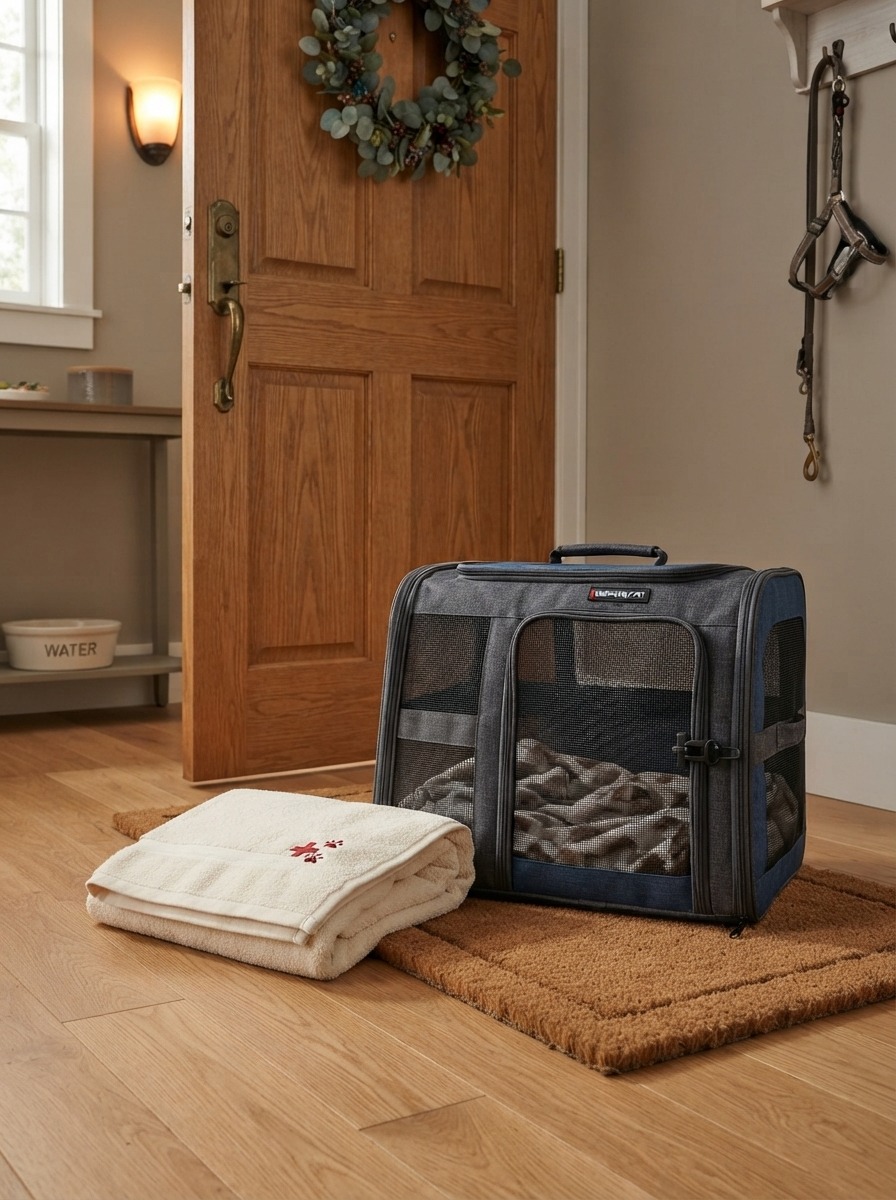
A scared or injured pet is often easier to help once they feel a little more secure — these two items do a lot of quiet, comforting work.
- A large towel, useful for warmth, gently restraining a scared pet, or padding a carrier
- A carrier or crate sized correctly for your pet, kept somewhere easy to grab quickly
- For dogs too large for a standard carrier, a secure harness and leash kept by the door serves the same purpose
[SOFT CTA — carriers] A sturdy, well-ventilated carrier makes transport calmer for everyone involved — we'll add our favorite pick here soon.
Where to Keep It All
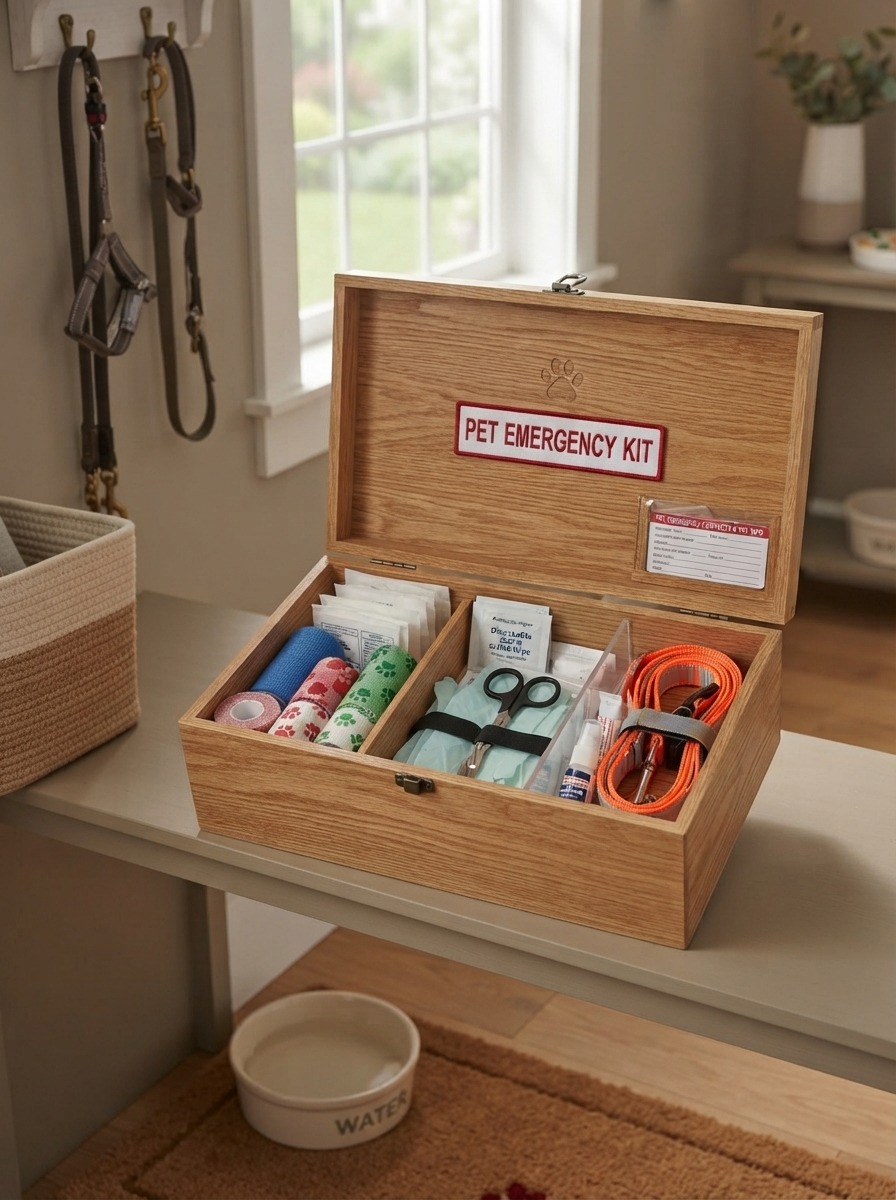
A great kit only helps if you can actually find it quickly — scattered supplies in random drawers defeat the purpose.
- Keep everything in one clearly labeled storage box or bag, not spread across the house
- Store it somewhere accessible near an exit, not buried in a closet
- If you have a car you travel with your pet in often, consider a duplicate mini-kit kept in the trunk
- Check and refresh the contents every few months — batteries die, bandages expire, and pets grow into new carrier sizes
[SOFT CTA — storage boxes] A dedicated, labeled storage box keeps everything together and easy to grab in a hurry — we'll link a sturdy option here once we've picked our favorite.
The Full Checklist at a Glance
- Self-adhesive bandage wrap & sterile gauze
- Disposable gloves
- Pet-safe antiseptic wipes
- Flashlight or headlamp
- Spare leash
- Tweezers
- Copies of vaccination records & known conditions
- Vet and emergency animal hospital contact info
- Recent photo of your pet
- Large towel
- Carrier or secure harness and leash
- Clearly labeled storage box, kept near an exit

You likely won't need most of this kit often — and that's exactly the point. Having it ready isn't about expecting the worst, it's about being able to stay calm and act quickly if the moment ever comes, so you can focus on comforting your pet instead of searching for supplies.
🛒 Ready to Put Your Kit Together? — Picks Coming Soon
We're currently testing pet first-aid kits, carriers, and storage boxes to recommend the ones we'd genuinely trust in our own home. Check back soon, or explore our other Smart Pet Living guides in the meantime.
Frequently Asked Questions
Do I need a separate kit for each pet?
Most core supplies (bandages, gloves, flashlight) can be shared across pets in one household kit. It's worth keeping each pet's individual paperwork — vaccination records and vet contacts — clearly labeled and separated within the same box.
Should I include any medication in the kit?
Only include medication your vet has specifically prescribed and instructed you to keep on hand for emergencies, clearly labeled with dosage instructions. Avoid adding general over-the-counter medications without your vet's direct guidance, since many common human medications are unsafe for pets.
How often should I check or update the kit?
Every 3–6 months is a good rhythm — check that batteries still work, bandages and wipes haven't expired, and that vaccination records are current, especially after any vet visits.
What should I do first if my pet is seriously injured?
Stay as calm as you can, use the kit to stabilize the situation if needed (like applying gentle pressure with gauze to control bleeding), and contact your vet or the nearest emergency animal hospital right away for guidance — don't wait to see if symptoms improve on their own.
With love,
The HelloOhNest Team 🌿