
You set a pen down, turn your back for two seconds, and — clatter — it's on the floor and your cat is staring at you like nothing happened. It's tempting to write this off as pure mischief, but there's real feline psychology behind the behavior. Understanding why your cat does it is the first step to redirecting that energy into something you both enjoy — and it turns out the right toys, shelves, and enrichment setup can make a surprising difference.
📋 What You'll Find In This Guide
It's Not Spite — It's Curiosity
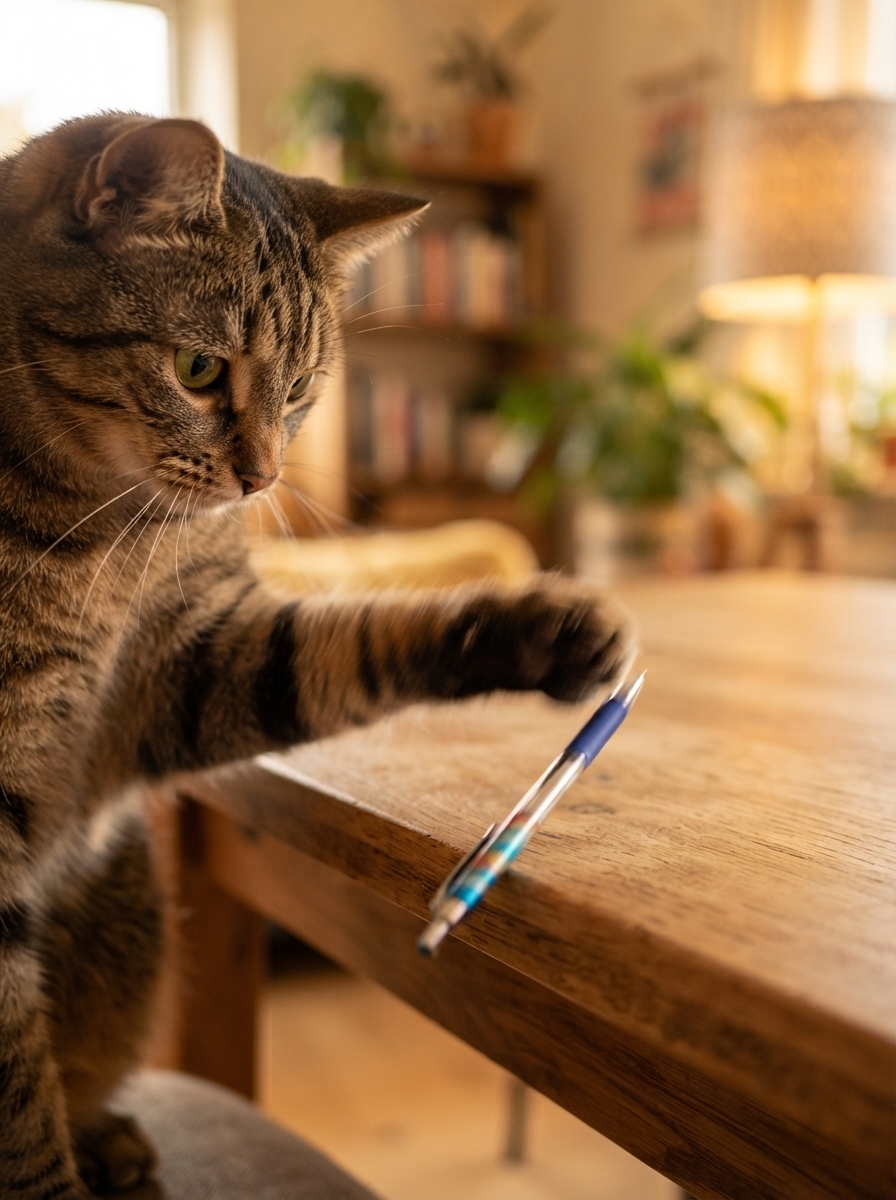
Cats are wired to investigate anything that moves, wobbles, or looks unfamiliar — and a pen rolling toward the edge of a table is exactly the kind of thing their brain flags as "worth checking out." A gentle paw tap is how cats gather information about an object: does it move? Does it make a sound? Is it alive?
When the object falls and rolls away, that's genuinely interesting feedback for your cat — not a deliberate act of defiance. In their mind, they've just run a small experiment, and the result was fascinating enough to remember.
Attention-Seeking: "Look at Me, Human"
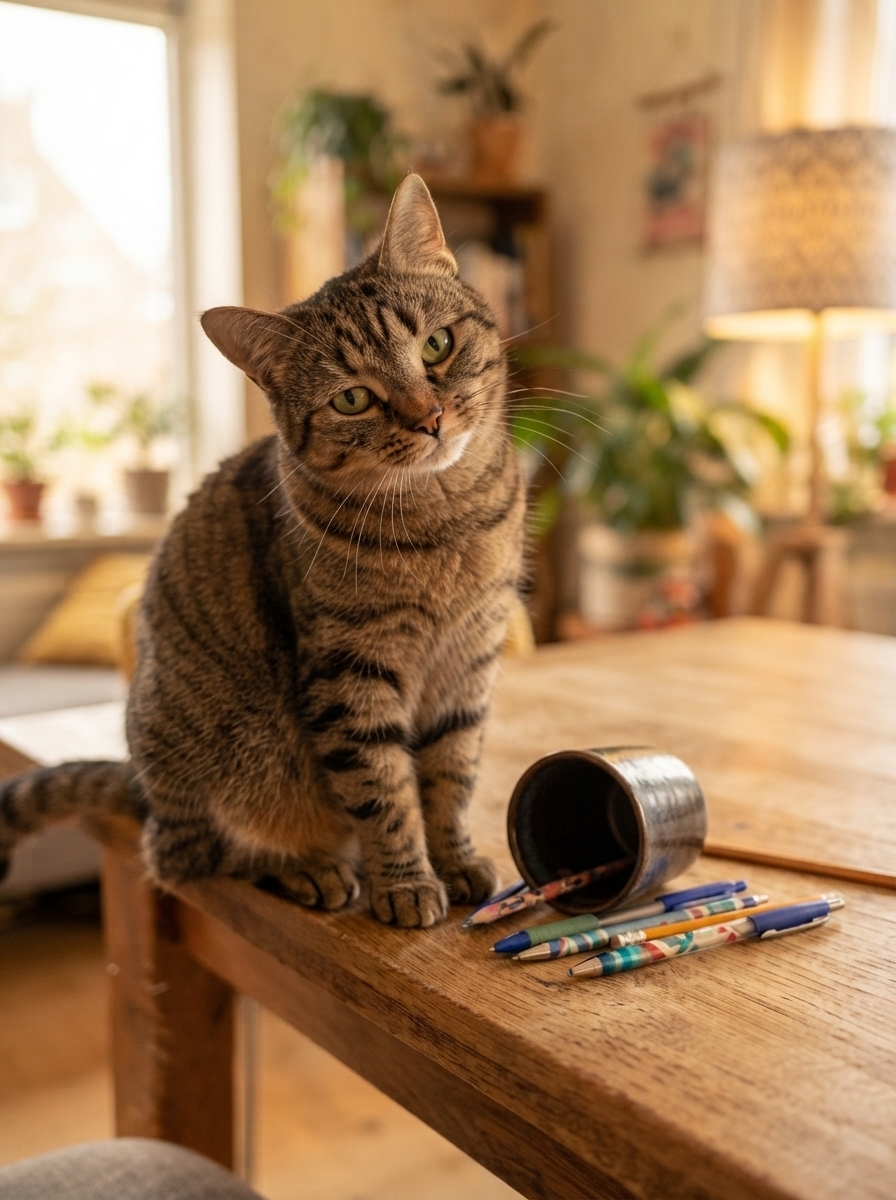
If your cat has learned that knocking something over makes you jump up, say their name, or come running, that's a lesson they won't forget. Cats are excellent at pattern recognition, and "I do this thing, human reacts instantly" is a very effective way to get noticed — especially if they've been alone for a while or you've been absorbed in your phone or laptop.
This is also a form of seeking interaction. Cats that don't get enough play or conversational attention during the day often find creative (and slightly destructive) ways to reopen the connection.
- Reacting loudly or picking the cat up immediately can accidentally reward the behavior
- A calm redirect to a toy is more effective than a dramatic response
- Scheduled play sessions reduce the "I need to make something happen" urge
🌿 HelloOhNest Insight
A cat that knocks things over right when you sit down to work or eat is often telling you something specific: "I want what you're focused on to be me." Rather than scolding, try a two-minute play burst before your next work session — many owners notice the behavior drops off within days.
Play and Hunting Instincts at Work
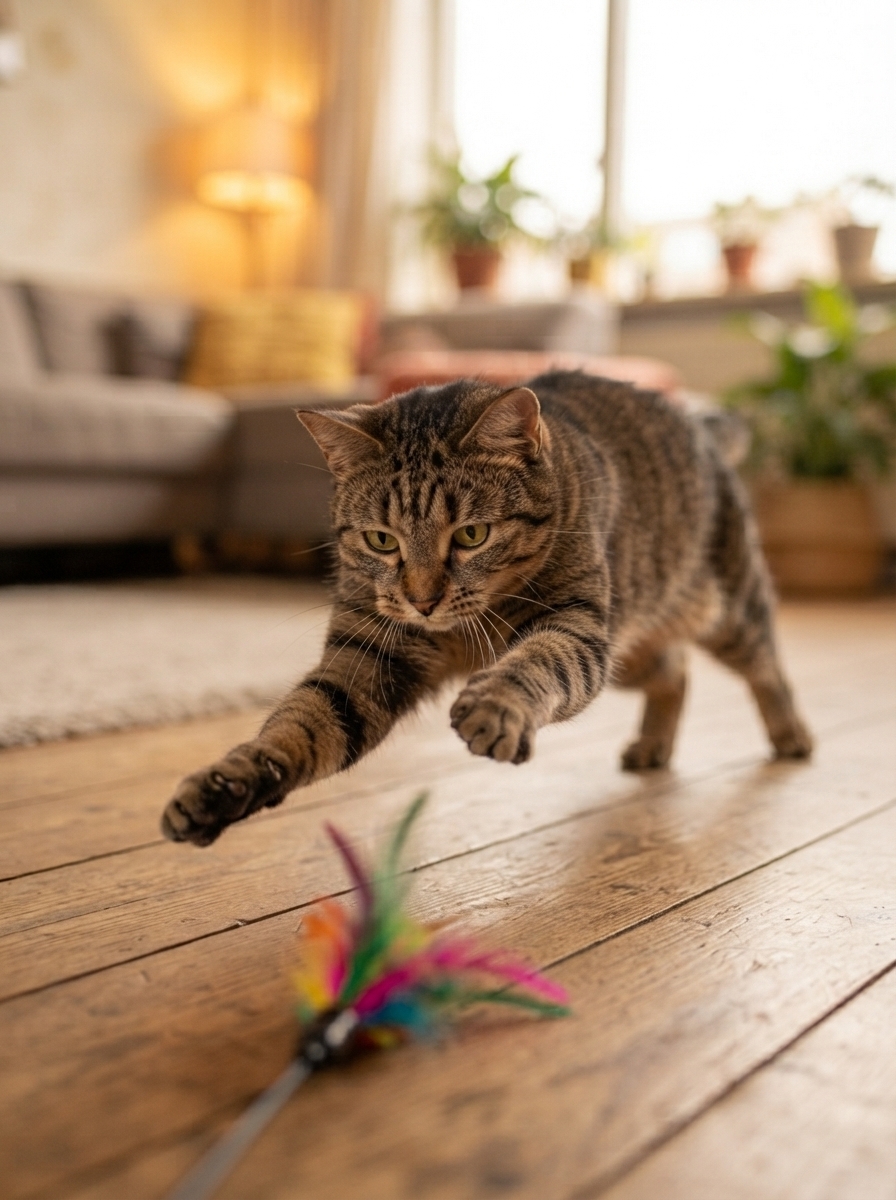
Even the most pampered indoor cat carries the instincts of a hunter. Batting, chasing, and knocking objects mimics the exact motions used to stun small prey in the wild — a swipe of the paw, a moment of stillness to watch it move, then another swipe. A small item skittering off a table and across the floor is, to your cat, a perfect stand-in for a mouse.
This instinct doesn't switch off just because dinner comes from a bowl. Without an outlet, it gets redirected toward whatever's closest and most "prey-like" — often small, loose items on counters and tables.
Boredom and the Need for Environmental Stimulation
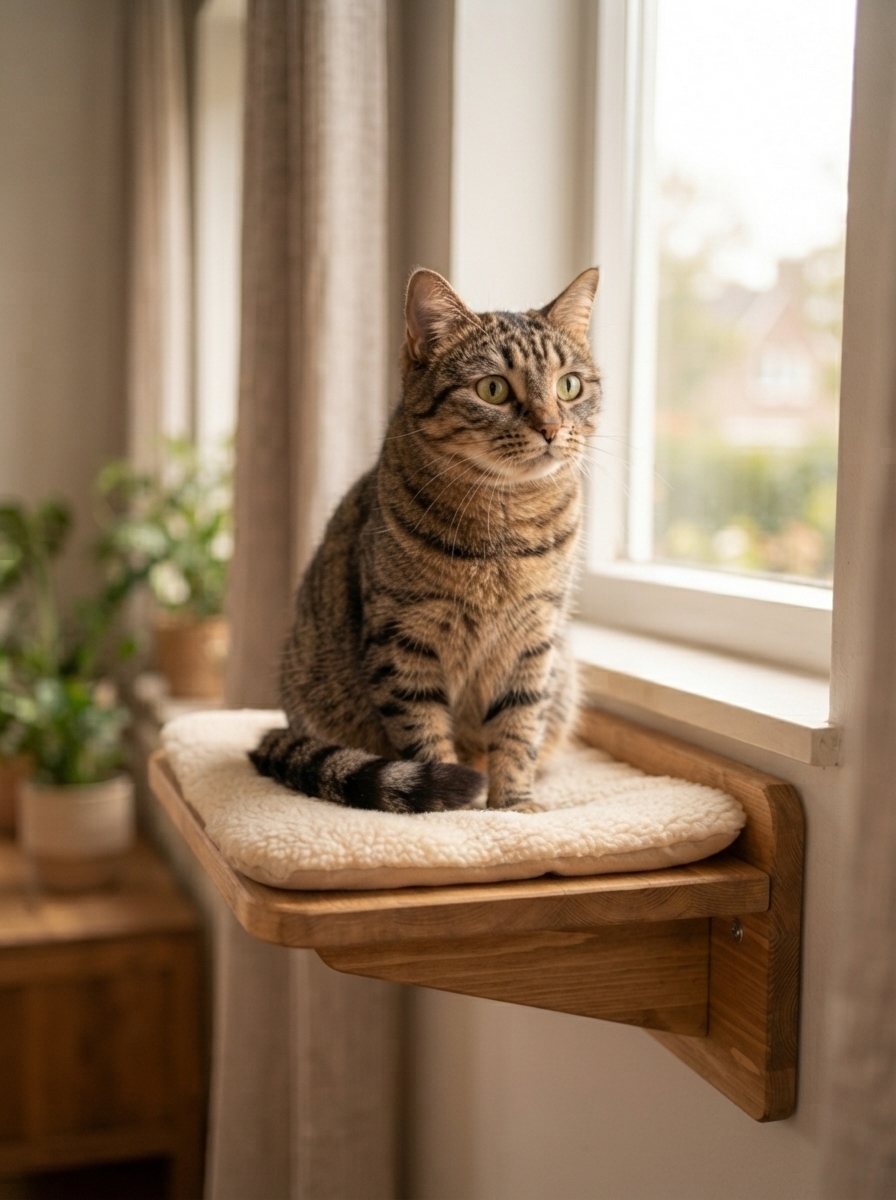
Cats living in under-stimulating environments — few climbing spots, no window views, limited toy rotation — tend to invent their own entertainment. Tables become the most interesting terrain available, and everything on them becomes a potential game.
Signs your cat may be under-stimulated:
- Knocking things over repeatedly, especially at the same time each day
- Pacing, vocalizing, or seeming restless in the evening
- Zooming through the house ("the zoomies") right after a quiet stretch
- Showing little interest in toys they've had for a long time
How to Redirect the Behavior: Toys, Shelves & Enrichment
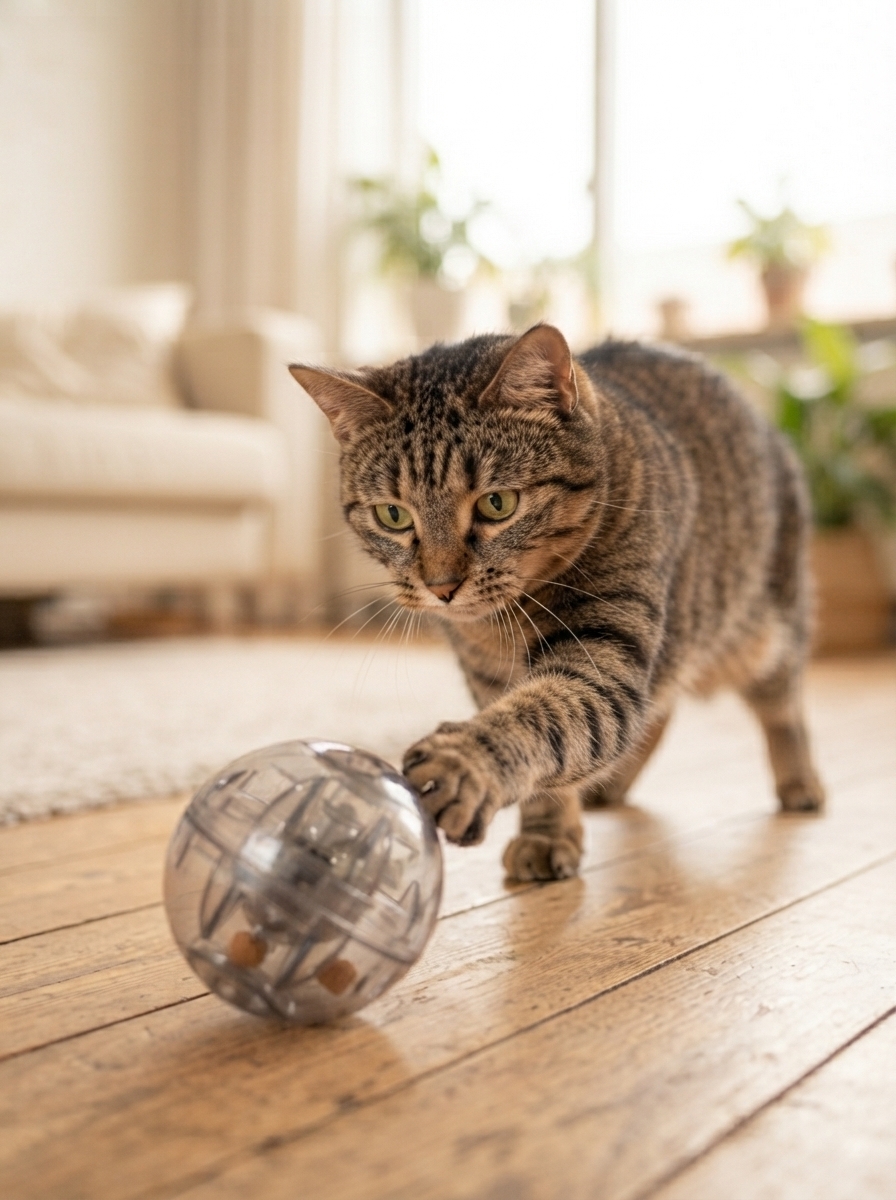
The goal isn't to punish curiosity or hunting drive — it's to give both a better outlet. A few changes tend to make the biggest difference:
- Interactive toys (wand toys, treat-dispensing puzzles, motion-activated mice) satisfy the "stalk and swipe" instinct in a way that doesn't involve your coffee mug.
- Cat shelves and window perches give cats their own elevated territory to survey the room from — often the exact height they were trying to reach on the table in the first place.
- Enrichment products like foraging mats, rotating toy baskets, and cat trees with scratch posts keep the environment interesting enough that a stray pen on the table stops being the most exciting thing in the room.
- Short daily play sessions (even 10 minutes) before mealtime channel hunting energy productively and tend to calm attention-seeking behavior too.
Most cat parents find that a combination of a wall-mounted shelf near a window plus a rotating set of interactive toys solves the "knocking things off the table" habit within a couple of weeks — not by eliminating curiosity, but by giving it somewhere better to go.
Frequently Asked Questions
Is my cat doing this on purpose to annoy me?
Almost certainly not out of spite. Cats don't have the same concept of "annoying someone" that humans do — the behavior usually comes down to curiosity, instinct, or wanting attention, all of which can be redirected.
Should I punish my cat when they knock something over?
Punishment tends to backfire with cats — it can damage trust without actually stopping the behavior, since it doesn't address the underlying curiosity or instinct. Redirecting to a toy or enrichment activity works far better long-term.
Will a cat shelf actually help with this behavior?
Often, yes. Many cats knock things off tables partly because they want the elevated vantage point. A dedicated shelf or window perch gives them that height and view without your belongings being at risk.
How much playtime does my cat actually need to reduce this?
Two short sessions a day, around 10–15 minutes each, using an interactive wand toy or puzzle feeder, is often enough to noticeably reduce attention-seeking and boredom-driven knocking within a week or two.
With love,
The HelloOhNest Team 🌿