
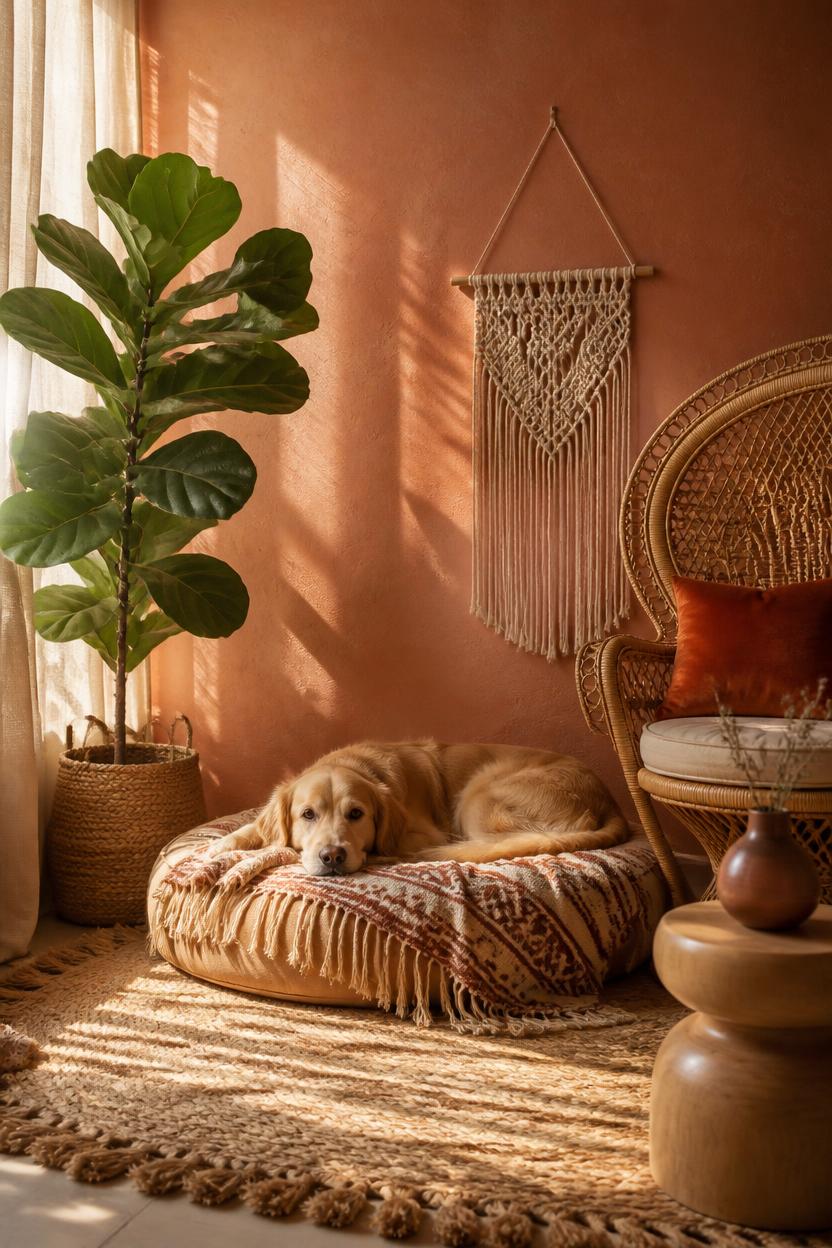
Calm by Design: A Pet-Friendly Home
Your home's layout might be quietly stressing out your pet — here's how to fix it.
We spend a lot of energy thinking about what we put in our homes for our pets — the bed, the bowl, the toys. We spend almost none thinking about the shape of the home itself.
Picture your living room from about a foot off the ground, with hearing several times more sensitive than yours. That's roughly your dog's experience of the same space. Open-concept living, wide sightlines, and constant visual stimulation can be exhausting for a naturally alert animal.
You don't need a renovation to fix this — small, intentional shifts to layout and routine matter far more than expensive products.
Table of Contents
How Your Pet Sees the Room
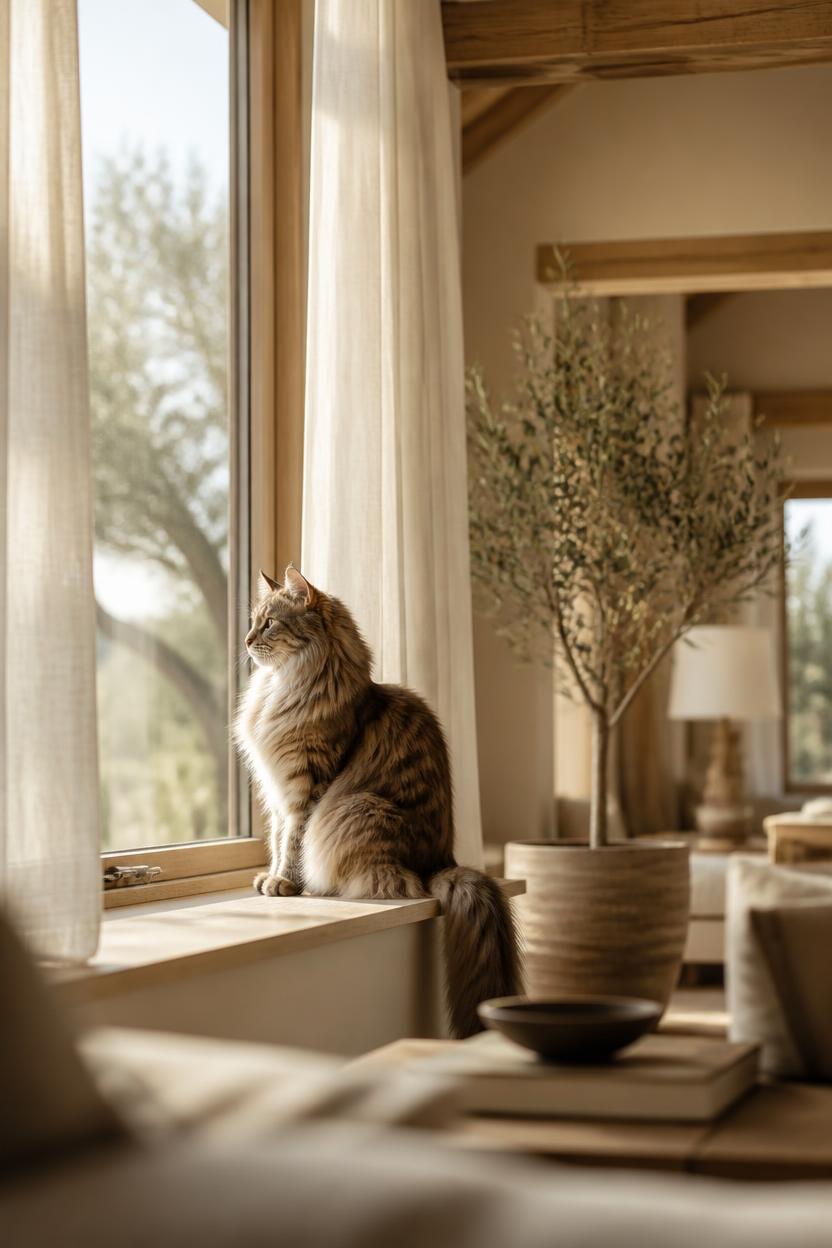
A different point of view, literally
A cat is wired to want elevation, enclosed hiding spots, and multiple escape routes — instincts inherited from wild ancestors, whether or not your home has room for any of it.
Open concept, hidden cost
Wide-open sightlines mean every person, car, and delivery truck passing a window is visible from anywhere in the home. For an alert animal, that's not spacious — it's exhausting.
"A calm home isn't the absence of stuff. It's the presence of predictability."
Five Small Shifts, Real Impact
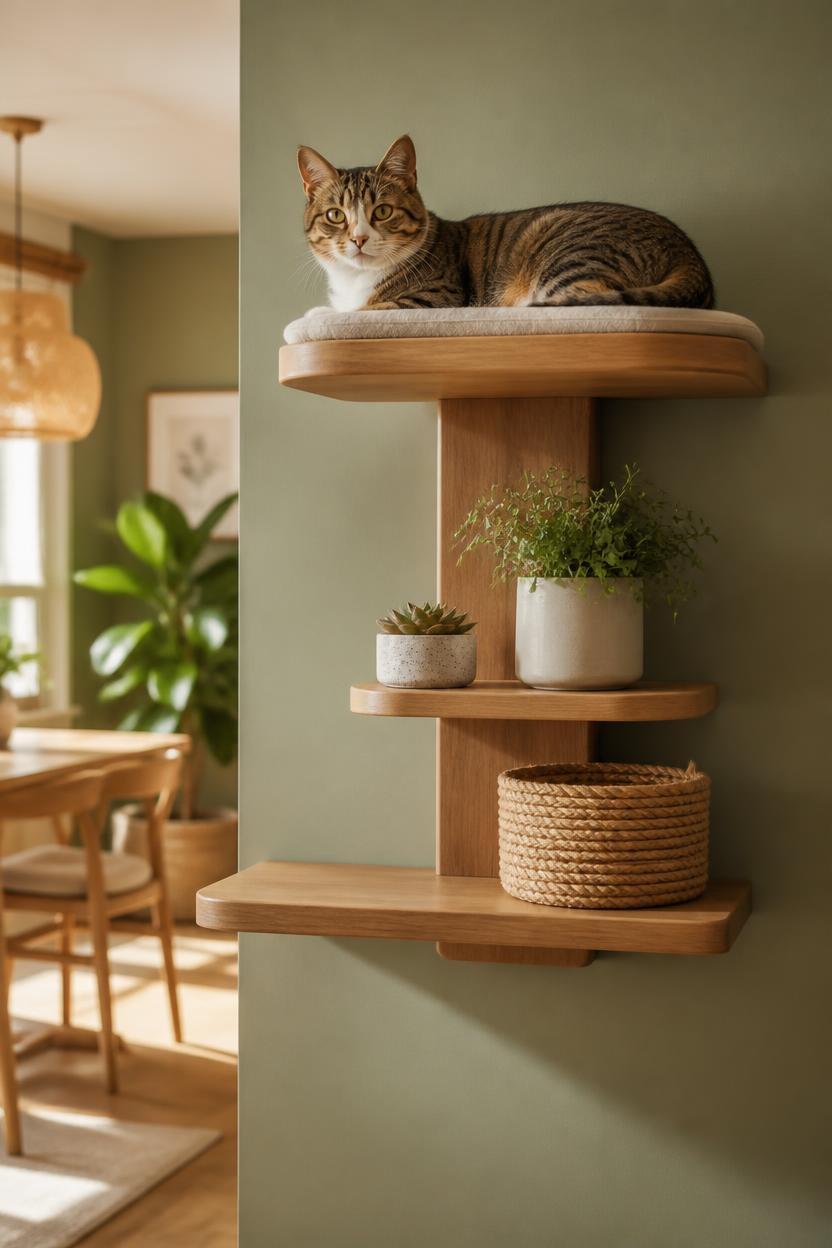
Small changes, real effect
- Create a true retreat zone, away from the front door and foot traffic
- Break up long sightlines with furniture or window film
- Give cats vertical options like shelving or window perches
- Keep gear organized in the same spot, every time
- Zone feeding and sleeping areas away from loud appliances
🌿 HelloOhNest Insight
Decluttering and pet-proofing aren't separate projects. A well-organized, thoughtfully zoned home is easier for you to manage and gives your pet an environment that feels stable and legible.
FAQ
- Q: Do I need to renovate to make my home calmer for my pet?
- A: No. Small changes — a moved bed, a blocked sightline, a designated quiet corner — often make more difference than a full renovation.
- Q: My cat hides a lot — is that a layout issue?
- A: It can be. If there's no elevated or enclosed space that feels safe, cats often default to hiding under furniture instead. Adding vertical options can help.
- Q: Where should I put my pet's retreat space?
- A: Away from the front door, high-traffic hallways, and loud appliances — ideally somewhere quiet that's still part of the household, not isolated in a back room.
- Q: Does open-concept living always stress pets out?
- A: Not always, but it can increase visual stimulation. Breaking up sightlines with furniture or window treatments is a simple way to offset this.
For room-by-room ideas on building a calmer, more organized home for you and your pet, explore more solutions from HelloOhNest.