
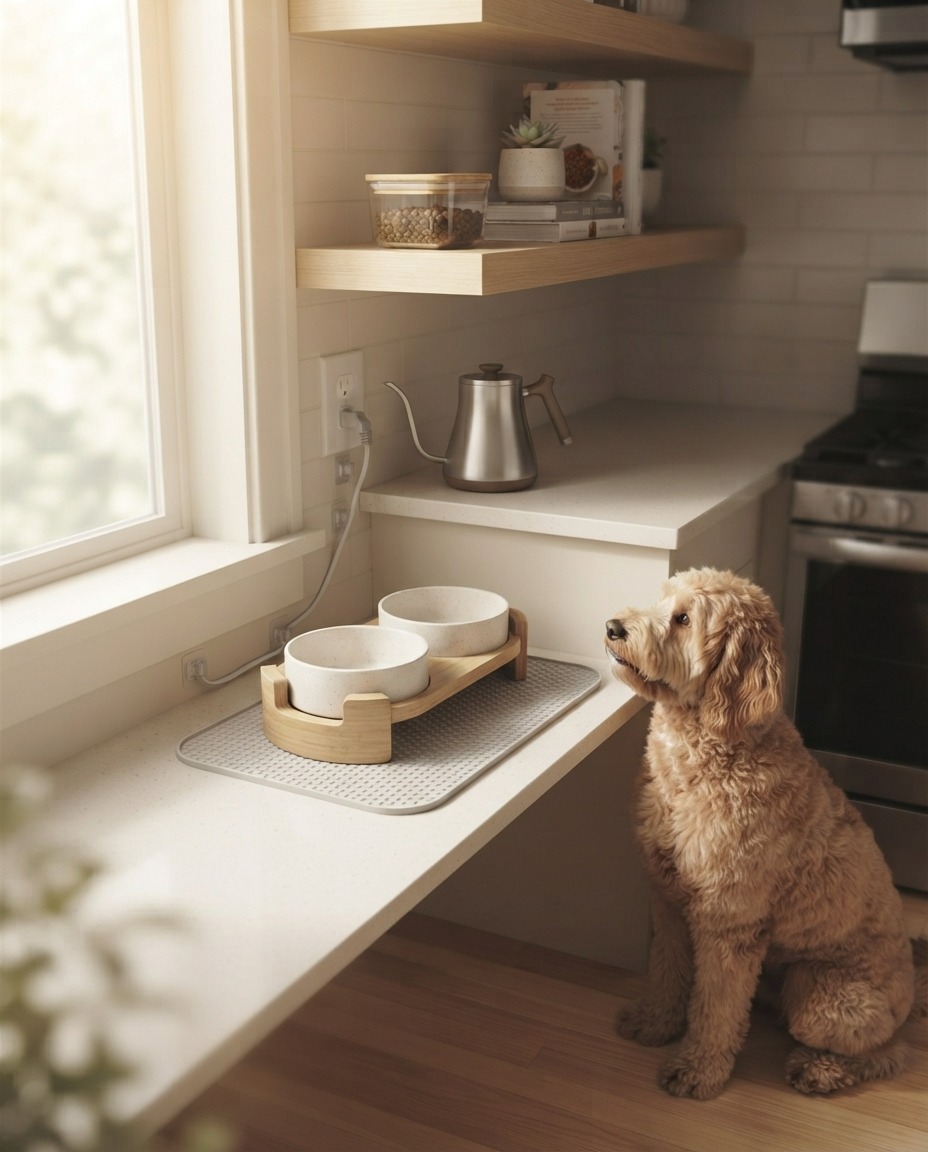
If your kitchen corner looks like a kibble crime scene by 9am, you're not alone. Spilled water, sliding bowls, and a bag of food shoved behind the trash can aren't just messy — they're a sign your pet's feeding zone was never actually designed, just accumulated. The good news: fixing it is simpler than it looks, and it doesn't mean sacrificing your kitchen's look.
What's in this guide
Choosing Bowls That Don't Ruin Your Kitchen Look
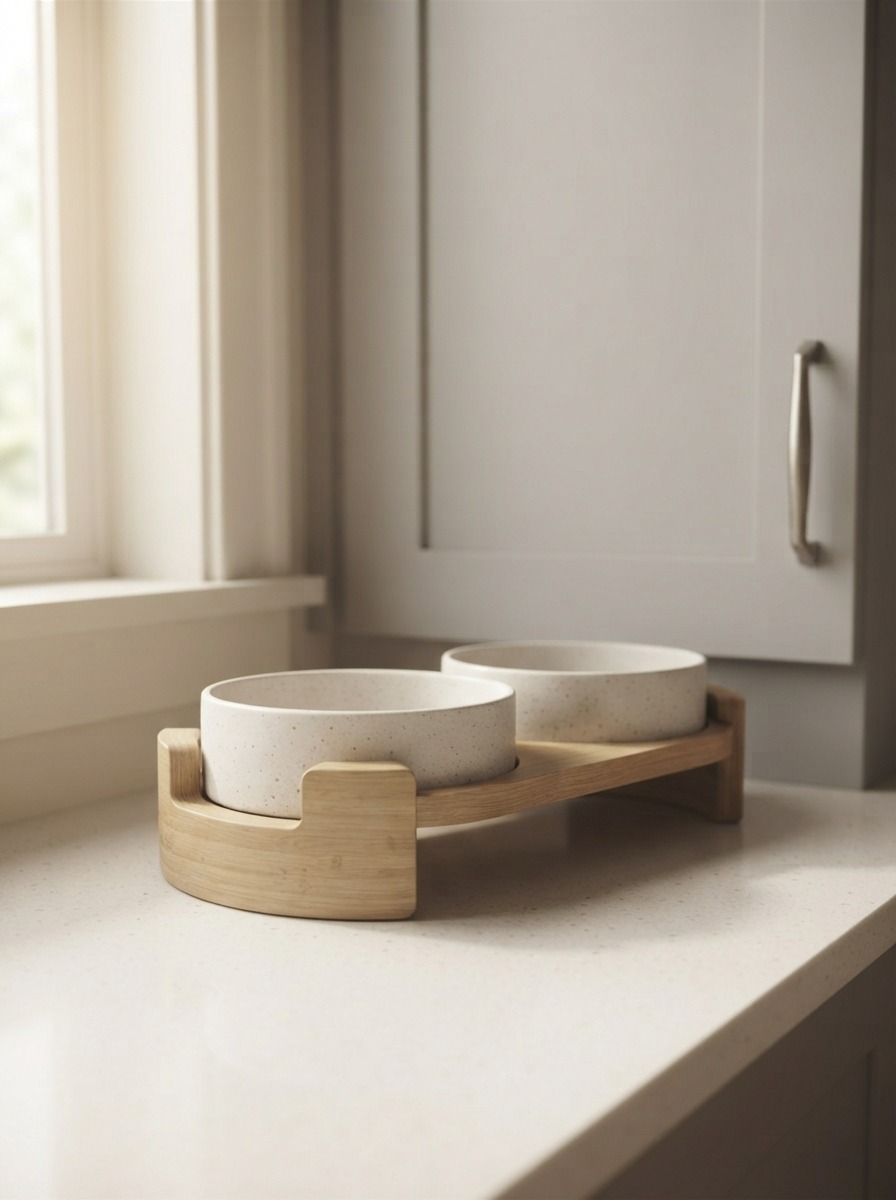
Plastic bowls sliding across tile every time your dog eats isn't just annoying — it's usually why the water ends up on the floor in the first place. An elevated, weighted bowl set solves two problems at once: it stops the sliding, and it's easier on your pet's neck and joints at mealtime, especially for larger breeds.
Look for ceramic or stainless steel over plastic. Beyond being easier to keep clean, neutral tones (stone, matte black, warm wood stands) blend into a kitchen instead of standing out as "the pet stuff."
The Mat That Actually Stops the Mess
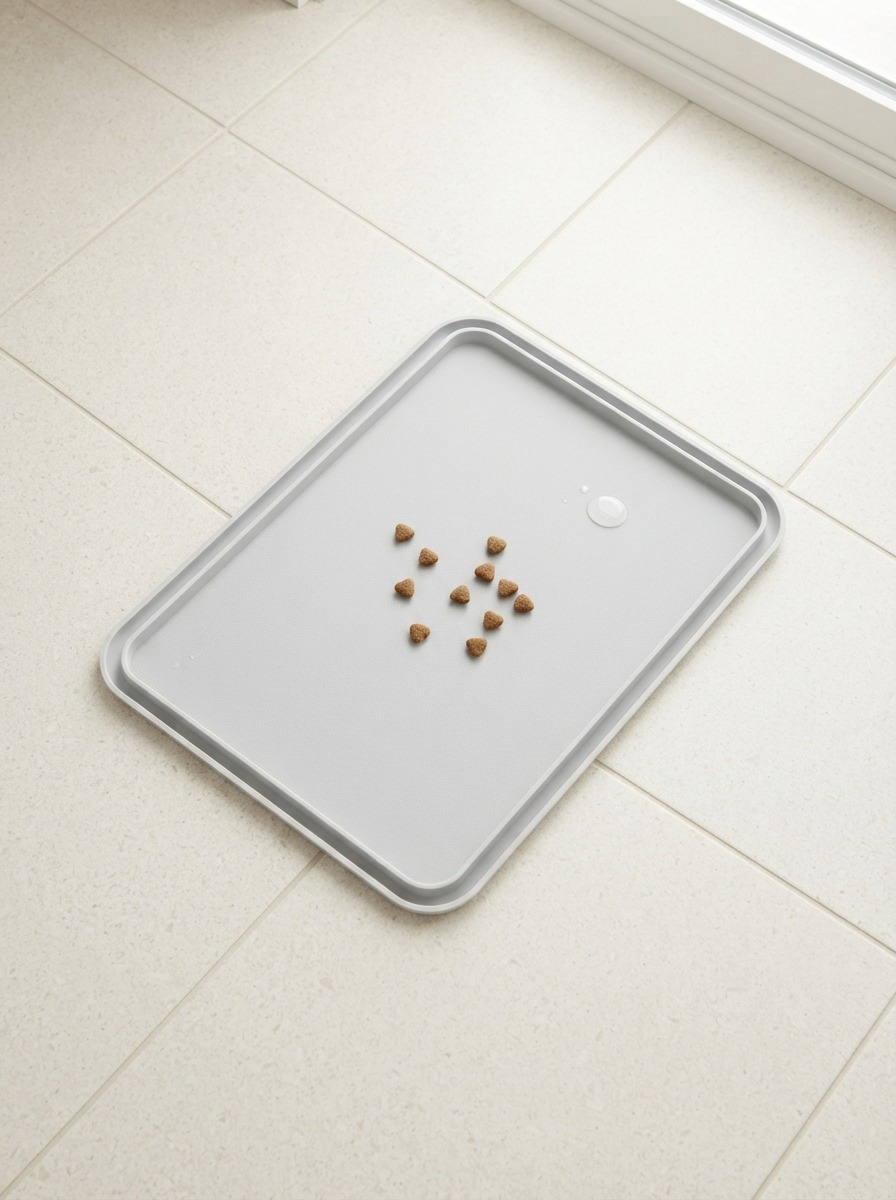
Fabric mats look nice for about a week, then they start smelling like old kibble and soaked-in water. A raised-lip silicone mat is the fix most people skip because it feels like a small detail — but it's the difference between wiping a mat in five seconds versus mopping the floor every night.
Silicone doesn't absorb odor, it's dishwasher safe, and the raised edge actually contains spills instead of just slowing them down.
Smart Food Storage That Keeps Things Fresh
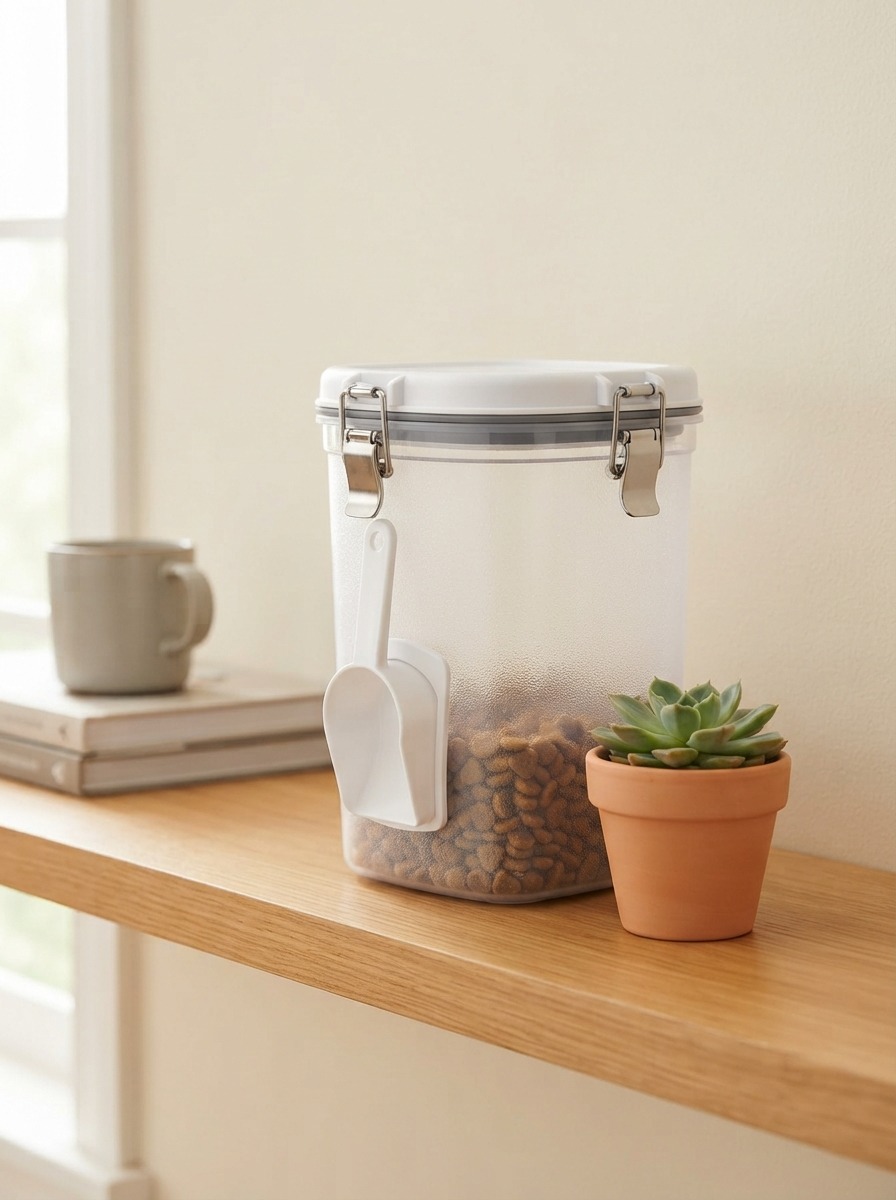
A clipped-shut bag of kibble in a cabinet is doing two things wrong: letting air in (which fades freshness and nutrients faster than most people realize) and taking up awkward, oddly-shaped space. An airtight, stackable container fixes both, and it means the food actually looks intentional if it's sitting out on a counter or open shelf.
Look for a wide mouth for easy scooping, a locking seal, and a size that matches your bag — oversized containers just mean more air sitting on top of the food.
Feeding zones that "work" long-term almost always share one thing: everything has a designated spot. Once the bowl, mat, food, and scoop each have a home, the mess stops being a daily decision and just becomes a habit.
Water Station Without the Puddles
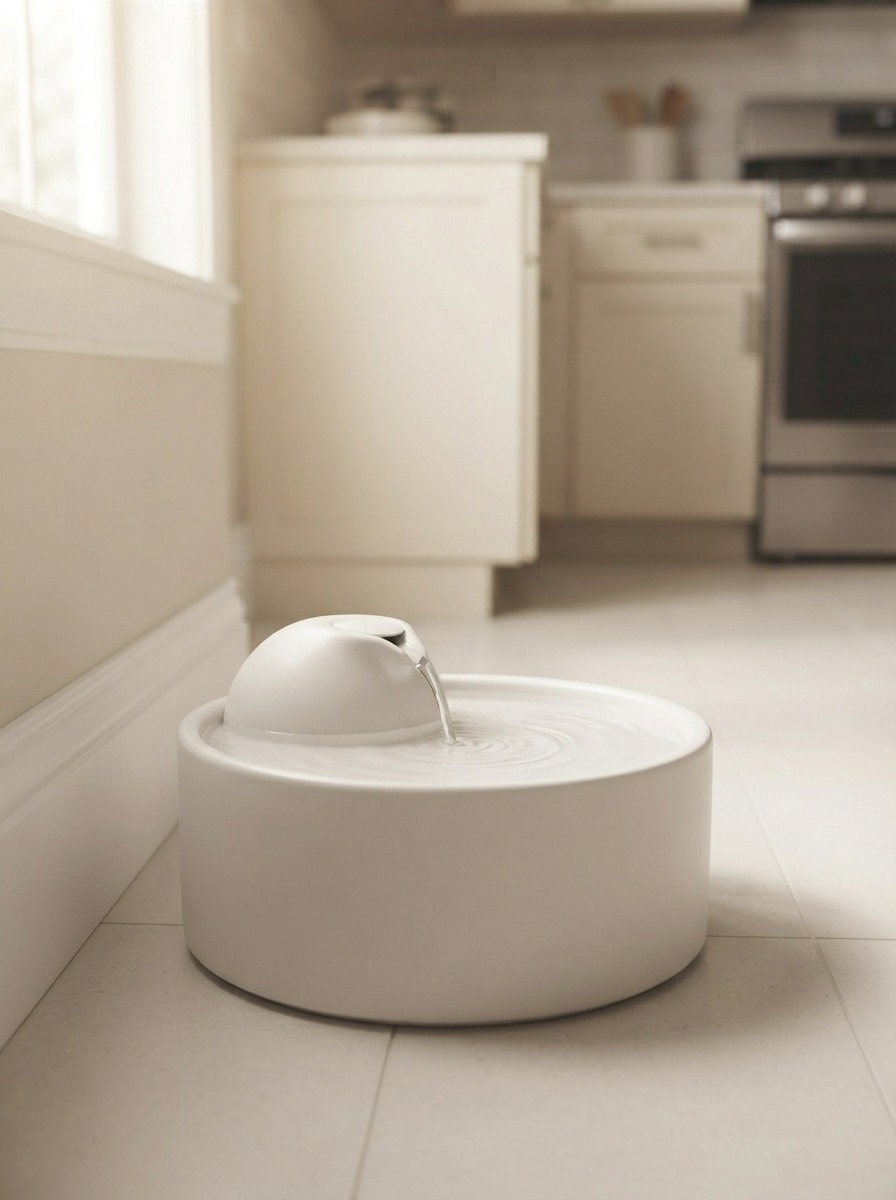
A still bowl of water gets murky fast and, for a lot of cats especially, gets ignored in favor of the sink faucet. A quiet pet water fountain keeps water circulating and filtered, which usually means more drinking and fewer trips to lap from somewhere less convenient.
Placement matters as much as the fountain itself: keep it a few feet from food, away from a busy walkway, and near an outlet if it's a filtered model.
Keeping It Clean, Day to Day
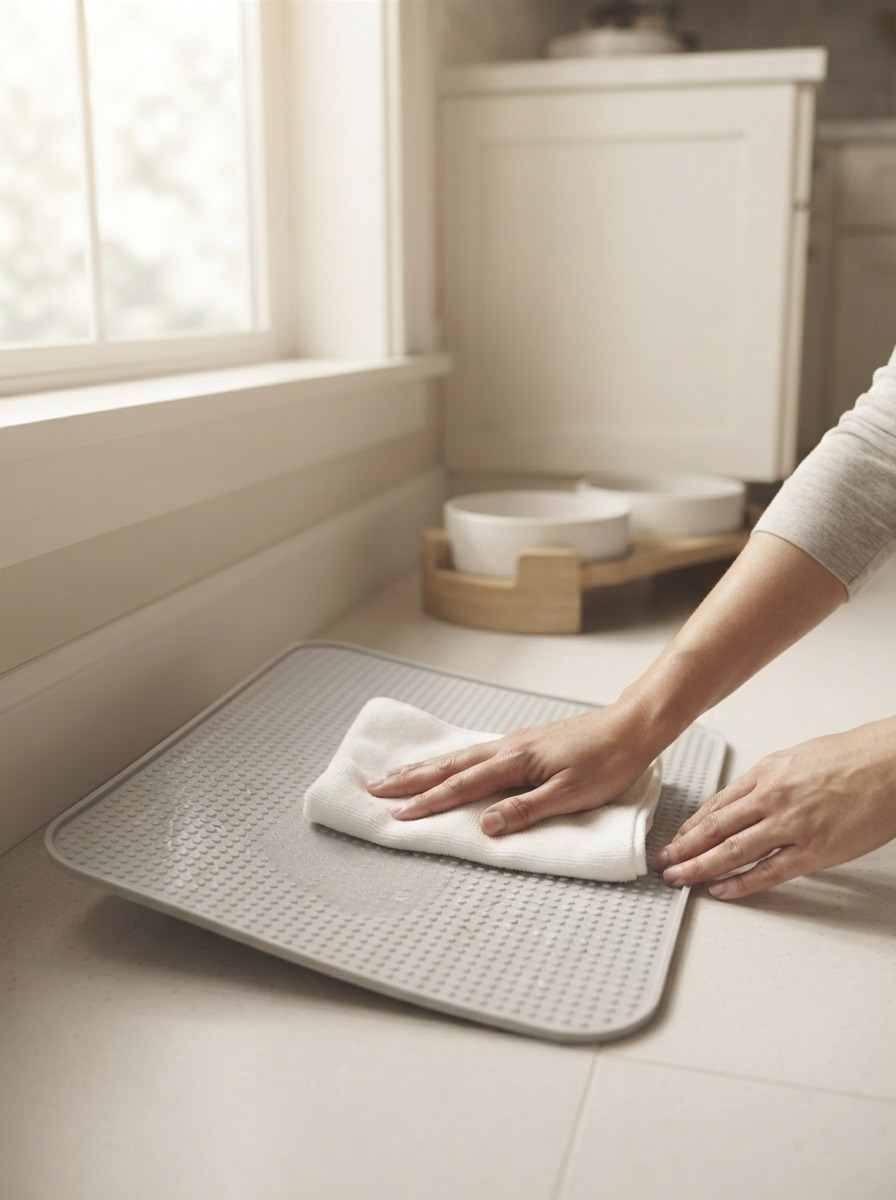
Even the best-designed feeding station needs a rhythm to stay that way. A quick daily wipe of the mat, a rinse of the bowls, and a weekly deep clean of the water fountain reservoir keeps bacteria and odor from building up where your pet eats every single day.
Keep a small brush and a designated cloth right in the storage container or nearby drawer — if cleaning supplies aren't within reach, they don't get used.
Our Feeding Station Picks
| Product | Best For | Why We Like It |
|---|---|---|
| Elevated Ceramic Bowl Set | Dogs, medium & large breeds | Weighted base, joint-friendly height, neutral finish |
| Raised-Lip Silicone Mat | Any pet, messy eaters | Contains spills, dishwasher safe, odor-resistant |
| Airtight Stackable Storage Bin | Dry kibble storage | Locking seal, wide scoop opening, stacks neatly |
| Quiet Pet Water Fountain | Cats & dogs, low water intake | Filtered, circulating water encourages drinking |
🔗 Affiliate link coming soon — check back for our direct product picks
Frequently Asked Questions
Where's the best spot in the kitchen for a pet feeding station?
Pick a low-traffic corner, away from the main walkway and the trash can, ideally on a hard floor rather than carpet or rug. Tucking it under an open shelf or at the end of a counter run also keeps it visually contained.
Do elevated bowls actually matter, or is that just marketing?
For larger dogs and older pets, raised bowls can reduce strain on the neck and joints during eating. For smaller pets it's more about stability and mess control, since a weighted, raised bowl is far less likely to slide or tip.
How often should I replace the feeding mat?
A quality silicone mat can last years with regular cleaning. Replace it if you notice cracking, a lingering odor that doesn't wash out, or the raised edge starting to flatten and lose its spill-catching function.
Is a water fountain necessary, or is a bowl enough?
A bowl is enough for many pets, but fountains genuinely help cats and low-drinkers who are drawn to moving water. If your pet already drinks well from a still bowl, a fountain is a nice-to-have rather than a must.
Can I use human food storage containers for pet kibble?
Yes, as long as the container is airtight and food-safe. The main things to check are a wide enough opening for a scoop and a seal tight enough to keep air and pests out.
With love, The HelloOhNest Team 🌿