
Pet-Safe Halloween Candy & Decor Checklist
Spooky season is full of sweet smells and shiny things. Here is what to keep out of reach, what to swap in, and exactly what to do if something goes wrong.
Halloween is the one night of the year when your home fills with candy wrappers, flickering candles and dangling cobwebs, all at nose height. Pets do not know what is festive and what is hazardous. They only know it smells interesting.
The good news: a few small changes make your home just as fun and a lot safer. Use this guide, then print the checklist near the end and stick it on the fridge.
Candy that is not for pets
A single sweet that falls on the floor can be enough to cause trouble, especially for small pets. Keep every bowl, bucket and bag on a high shelf or behind a closed door.
The main things to watch
- Chocolate: toxic to dogs and cats. Dark and baking chocolate are the most dangerous.
- Xylitol: a sweetener in sugar-free gum, mints and candy. It is very dangerous for dogs, so keep it away from cats too.
- Raisins and grapes: can harm a dog's kidneys. Watch for them in trail mix and snack boxes.
- Wrappers and hard candy: foil, plastic and sticks can cause choking or blockages.
Remember the kids' buckets
Trick-or-treat bags often sit on the floor after the night is over. Move them out of reach as soon as the candy is sorted.
Decor to place with care
You do not have to give up the pumpkins and cobwebs. Just pick safer versions and put them where curious paws cannot reach.
Ones to move or replace
- Candles and carved pumpkins: flames can burn pets or tip over. Use LED candles instead.
- LED candles with button batteries: choose battery-secured ones and keep spares sealed.
- Light strings and cords: chewing can cause burns or shocks. Tuck them behind furniture.
- Glow sticks: the liquid inside tastes awful and causes drooling and irritation.
- Fake cobwebs and small plastic bits: eyeballs and spiders can be swallowed, and stretchy webbing can tangle or block the gut.
Easy boho swap
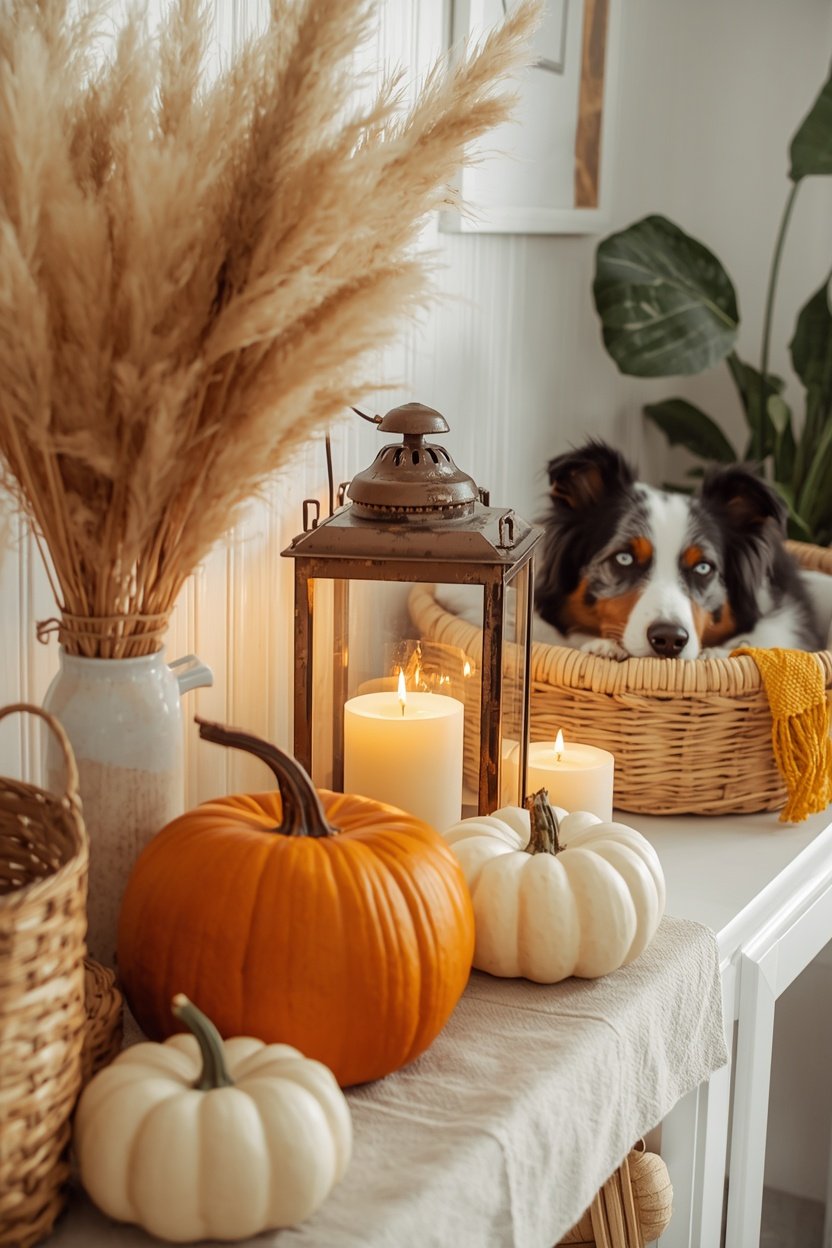
Try dried pampas grass, plain pumpkins in terracotta tones and warm LED lanterns. They look calm, cozy and on-brand without the risk.
Safe treats for your own trick-or-treater
Pets love joining the fun, so give them their own treat while the kids are collecting theirs. It keeps them busy, calm and out of the candy.
Ideas that work
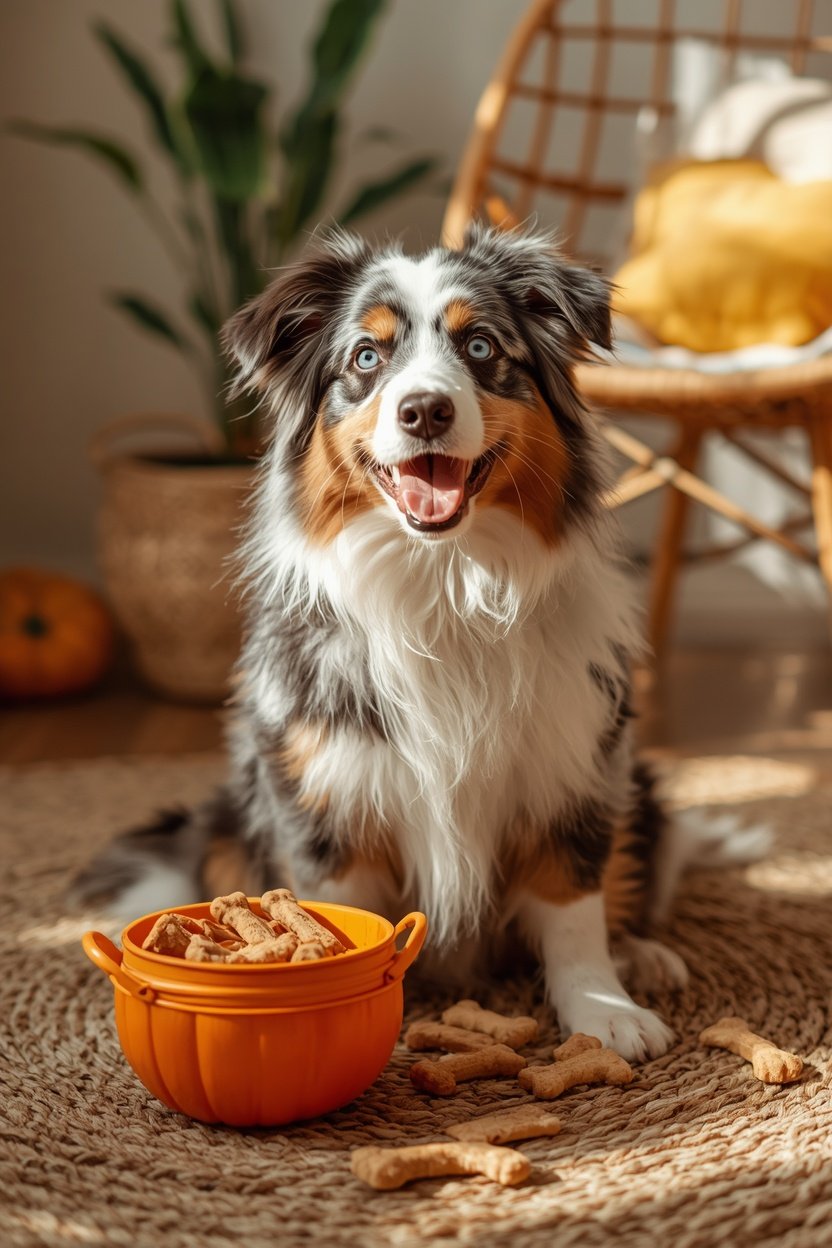
- Pet-specific treats in a tiny pumpkin bucket
- A lick mat or stuffed chew toy to keep them busy during the doorbell rush
- A spoonful of plain, unsweetened cooked pumpkin (not pie filling), if your vet agrees it suits your pet
- Their own kibble in a puzzle feeder for a slow, calm dinner
Keep portions small
Treats should stay a small part of the day's food, and new foods are best introduced slowly. Check with your vet if your pet has allergies or health conditions.
Your pet-safe Halloween checklist
Keep out of reach
- All chocolate, including baking and dark
- Sugar-free gum, mints and candy
- Raisins and trail mix
- Wrappers, sticks and hard candy
- Kids' trick-or-treat buckets
- Open flame candles and carved pumpkins
- Cords and light strings at floor level
- Glow sticks and button batteries
- Fake cobwebs and small plastic decor
Safe swaps and prep
- LED candles with secured batteries
- Pet-friendly treats in a pumpkin bucket
- Lick mat or puzzle feeder ready
- Candy on a high shelf or behind a door
- Safe room set up (see part 1)
- ID tags and microchip details updated
- Vet's number saved in your phone
- Poison helpline number saved
- Nose-height audit done
If your pet eats something risky
- Call right away. Contact your vet, an emergency clinic or a pet poison helpline. Do not wait for signs to appear.
- Do not make your pet vomit unless a professional tells you to.
- Have these ready: what was eaten, roughly how much, when, and your pet's weight.
- Bring the wrapper or packaging if you can.
In the US, the ASPCA Animal Poison Control Center is (888) 426-4435 and Pet Poison Helpline is (855) 764-7661. A consultation fee may apply. Outside the US, look up your local emergency vet or poison service today and save the number in your phone.
Quick answers (FAQ)
How much chocolate is dangerous for a dog?
It depends on the type of chocolate and your dog's size, and even small amounts of dark chocolate can be risky. If your pet has eaten any, call your vet or a poison helpline rather than guessing.
Is candy with xylitol really that dangerous?
Yes, for dogs it can cause a rapid drop in blood sugar and serious liver problems. Check labels on sugar-free gum, mints and baked goods, and treat any exposure as an emergency.
Are pumpkins safe for pets?
Plain pumpkin is generally gentle on pets in small amounts, but pie filling, spices and sugar are not. Moldy carved pumpkins can also upset tummies, so toss them after a few days.
Are glow sticks poisonous?
The liquid is not usually serious, but it tastes bitter and can cause drooling, agitation and mouth irritation. Keep them away and call your vet if your pet chews one.
What are the signs my pet ate something harmful?
Vomiting, drooling, restlessness, tremors, a racing heart or unusual tiredness can all be signs. Because symptoms sometimes appear hours later, call as soon as you suspect something.
Keep your home safe and cozy
Next in the series: a Halloween-proof cozy retreat your pet will love. Explore more calm-home ideas for happy pets in the meantime.
Browse calm home solutions Visit HelloOhNestPart 2 of 3 in the Calm Halloween for Pets series.