
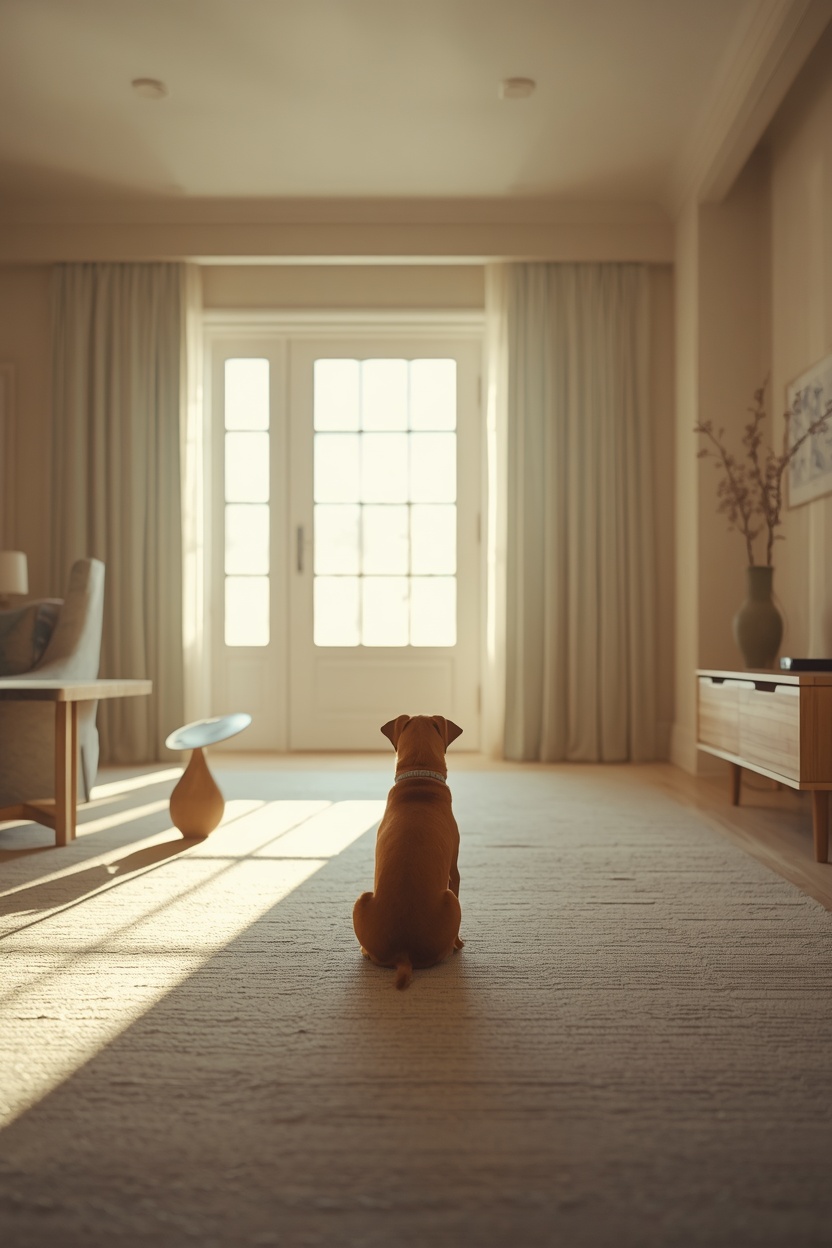
Why Today's Pets Feel More Anxious
We've given pets softer beds and more toys than ever — so why do so many seem more stressed?
By most measures, pets have never been more comfortable. Yet anxiety-related behaviors in dogs and cats are on the rise, not the decline.
The explanation isn't that we love our pets less. It's that the shape of modern life — long commutes, louder homes, constant notifications — doesn't fit them particularly well. Understanding why is the first step to fixing it.
Here's what's really driving the rise in pet anxiety, and how to build an environment that works with your pet's nervous system instead of against it.
Table of Contents
What's Really Driving the Stress
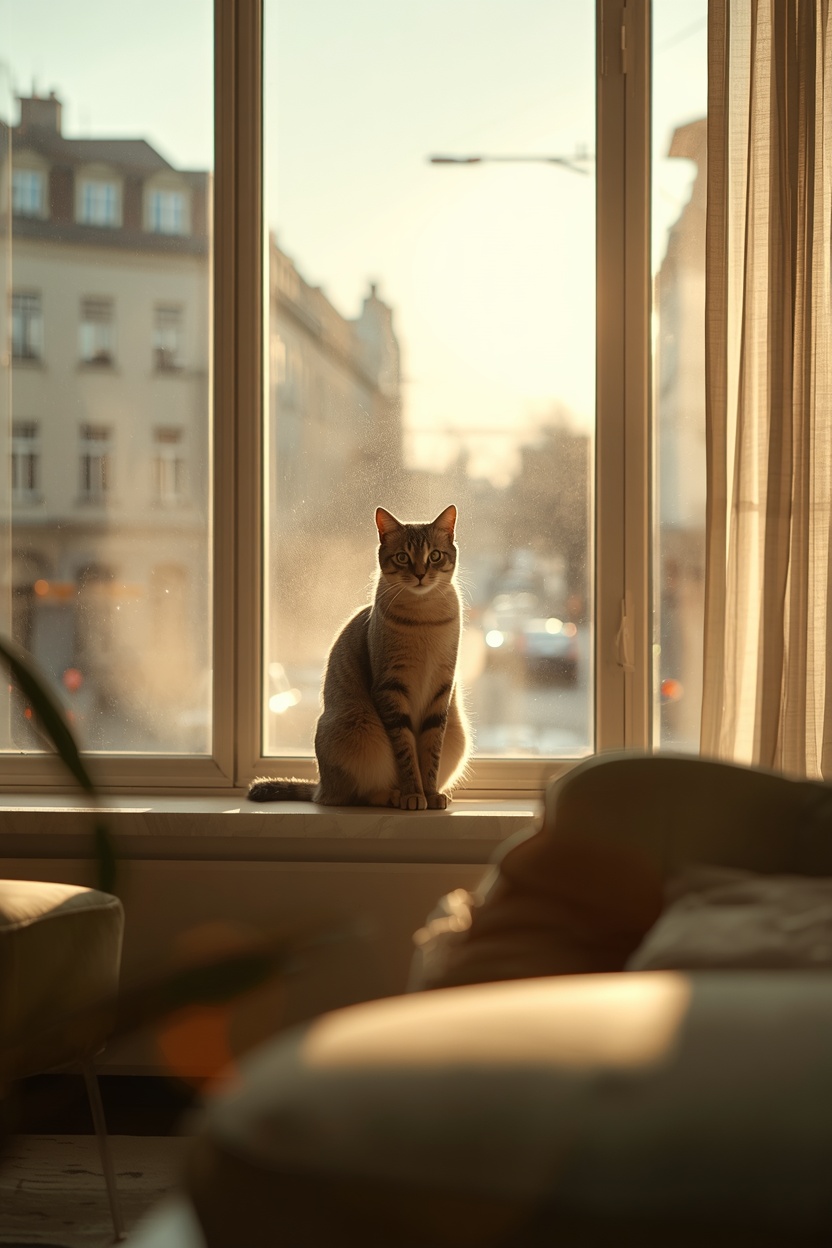
Home alone, more than ever
For a highly social animal, hours of solitude aren't neutral — they're a genuine source of stress. Separation-related distress is one of the most common issues reported by dog owners, and cats show their own version of it too.
The noise nobody notices
Notification pings, video calls, background TV — our homes have become louder, more stimulating environments than a decade ago. Dogs and cats hear far more than we do, so a home that feels calm to us can feel like a constant hum of alertness to them.
"Pets didn't change. Our schedules did — and they're the ones adjusting to it."
Smart Tech, Used Right
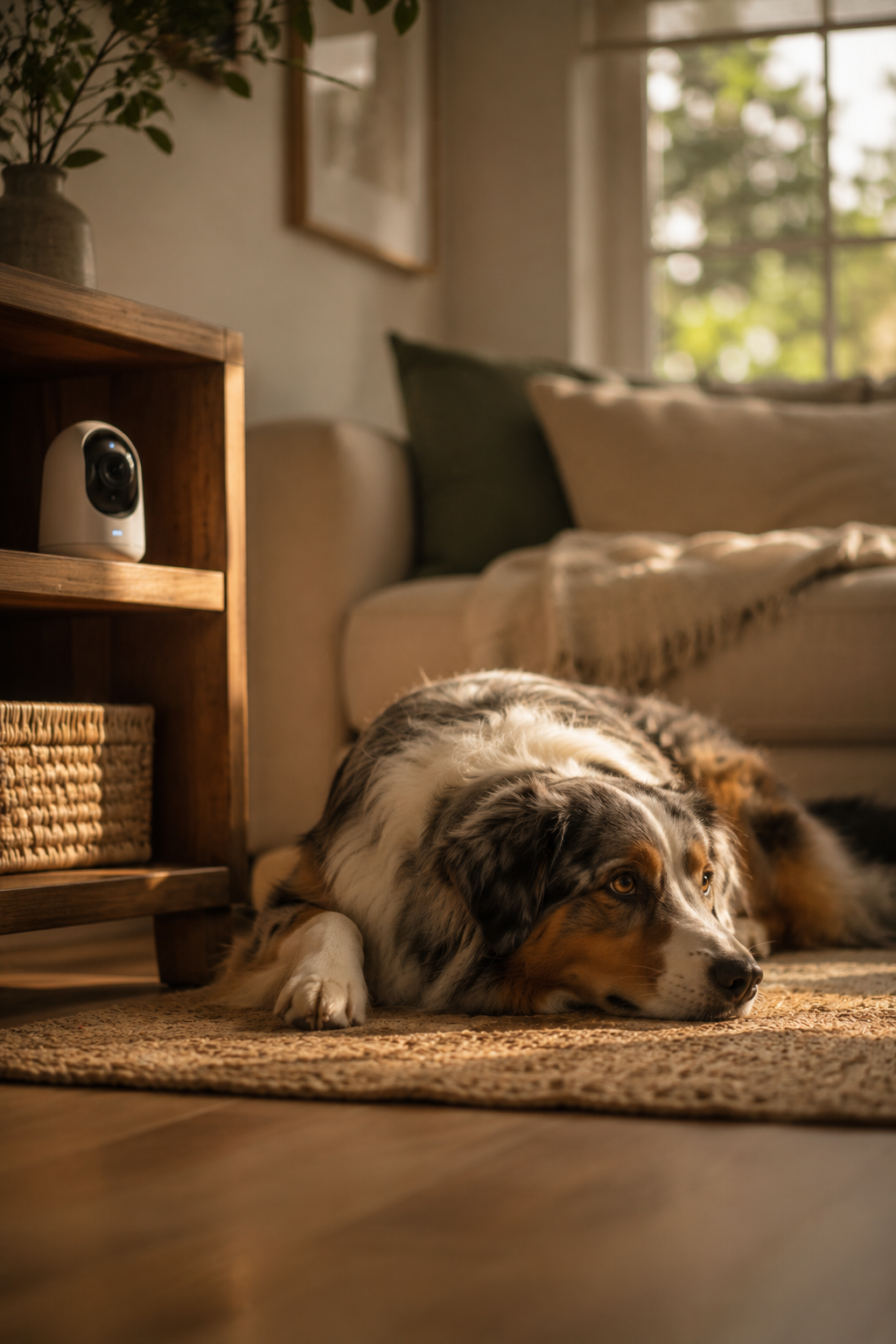
Technology can help — with intention
- Pet cameras with two-way audio let your voice reach them while you're away
- Automated feeders keep mealtimes consistent even when your schedule isn't
- Smart lighting can mimic natural daylight cycles
- White noise systems can mask sudden outside noises
Rethinking "enough"
The fix for a stressed pet is rarely "buy more." It's usually "simplify and stabilize" — a predictable schedule, a quiet retreat space, and technology that supports connection rather than replacing it.
🌿 HelloOhNest Insight
We can't undo the pace of modern life, but we can be more deliberate about the environment we leave behind when we walk out the door — quieter, more predictable, and genuinely built with our pet's nervous system in mind.
FAQ
- Q: Is separation anxiety only a dog problem?
- A: No. Cats show their own version of it too — often through overgrooming, litter box avoidance, or clinginess the moment their person returns.
- Q: Will a pet camera actually calm my pet down?
- A: Used with two-way audio, a camera can genuinely soothe an anxious pet by letting your voice reach them. It's most helpful as a comfort tool, not just a monitoring device.
- Q: Do I need to buy a lot of smart devices?
- A: No — a small number of thoughtfully chosen tools, like a feeder and a camera, generally do more than a house full of gadgets.
- Q: What's the single biggest factor in reducing pet anxiety?
- A: Predictability. Consistent routines around feeding, walks, and alone-time tend to matter more than any individual product.
Curious how to build a home that works for your pet's nervous system, not just their comfort? Explore more solutions from HelloOhNest.