
A simple room-by-room system to keep your home tidy, calm, and functional — for you and your pet.
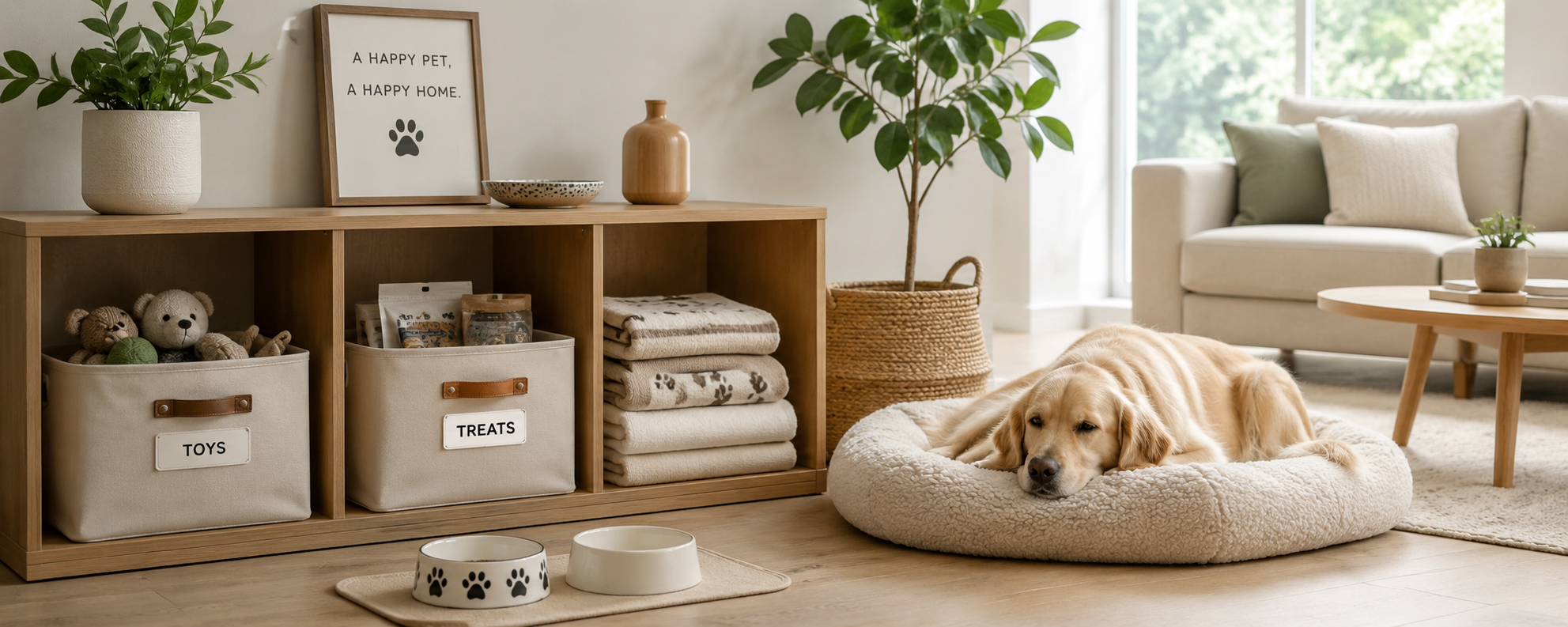
Toys under the couch. Leashes tangled by the door. A food bag spilling out of the pantry. If your home feels more “obstacle course” than “calm retreat,” you’re not alone — and you don’t need to overhaul your whole house to fix it. You just need the right zones.
In this guide, we’ll walk through 7 essential zones every pet-owning household should consider — from the food station to the “goodbye corner” by the door — with practical, realistic setups you can start today.
Why Pet Zones Matter More Than “More Storage”
Most clutter isn’t a storage problem — it’s a system problem. Buying another basket won’t help if there’s no clear “home” for each item. Zones solve this by answering one question for every pet item you own: where does this actually get used?
When you organize by zone instead of by category, cleanup becomes automatic. Your pet learns the routine too — many pets settle faster when their food, bed, and toys live in predictable places.
Zone 1: The Feeding Station
Keep food, bowls, and treats in one contained spot
Pick a low-traffic corner of the kitchen or utility room. A small mat under the bowls catches spills and protects your floor. Store dry food in an airtight container nearby instead of leaving the bag open or half-rolled.
3 quick wins:
-
- Use a slim rolling cart for food, treats, and a scoop — easy to move for cleaning
-
- Label treat containers so anyone in the household (or a pet sitter) knows what’s inside
-
- Keep a small trash bin nearby for empty pouches and packaging
Zone 2: The Sleep & Rest Zone
Give your pet a consistent, calm place to settle
A dedicated bed or crate — placed away from high-traffic walkways — helps pets decompress, especially in busy households. Consistency matters more than the bed’s price tag.
3 quick wins:
-
- Choose a washable bed cover for easy weekly cleaning
-
- Keep the area away from loud appliances (washing machines, TVs)
-
- If you have multiple pets, give each one their own resting spot to avoid tension
Zone 3: The Toy & Play Zone
Contain the chaos with one bin, one shelf, one rule
Toys multiply fast. A single open basket at floor level — one your pet can access — keeps play items contained and makes tidying a 30-second task, not a treasure hunt across the house.
3 quick wins:
-
- Rotate toys weekly: keep half in the bin, half stored away, and swap them to keep play exciting
-
- Separate “chew-safe” toys from anything with small parts if you have multiple pets
-
- Do a quick weekly toss of anything torn or unsafe
Zone 4: The Grooming & Health Corner
One drawer or basket for brushes, meds, and paperwork
Brushes, nail clippers, medication, vaccination records — these items are used often but rarely have a “home,” so they end up scattered. A single labeled drawer or caddy keeps everything findable, especially useful in a vet emergency.
3 quick wins:
-
- Store medical records (digital or paper) in the same spot as physical grooming tools
-
- Use a small caddy that can travel to vet visits
-
- Keep a printed list of medications and dosages taped inside the drawer or cabinet door
Zone 5: The Entryway “Goodbye & Hello” Station
Leashes, poop bags, and towels — grabbed in seconds on the way out
This is the zone that saves the most daily frustration. A hook for the leash, a small bin for waste bags, and a towel for muddy paws, all within arm’s reach of the door.
3 quick wins:
-
- Mount hooks at a height that’s easy to grab one-handed
-
- Keep a spare leash or harness here as backup
-
- Add a paw-wipe towel or mat right at the threshold
Zone 6: The Litter Box / Bathroom Zone
Contained, ventilated, and easy to clean
For cat owners, this zone matters most for household calm. Choose a spot with good airflow, away from the feeding station, and store litter, scoops, and liners in a nearby cabinet or covered bin to keep supplies out of sight but within reach.
3 quick wins:
-
- Keep a small trash bin with a lid right next to the litter box
-
- Store backup litter in a sealed container to control odor
-
- If space allows, use a litter mat to catch tracking
Zone 7: The “Just in Case” Emergency Kit
One bag, ready to grab
A small bag or bin with a few days of food, a spare leash, basic first aid items, and copies of medical records — ready to go in case of a sudden trip, evacuation, or emergency vet visit.
3 quick wins:
-
- Store it near the entryway station so it’s easy to grab quickly
-
- Check and refresh contents every few months
-
- Keep a laminated card with your vet’s contact info inside
HelloOhNest Insight
 HelloOhNest Insight A well-organized pet zone isn’t just about tidiness — it directly supports your pet’s sense of safety. Pets thrive on predictability, and knowing exactly where their food, bed, and toys are can reduce stress-related behaviors like excessive barking, hiding, or destructive chewing. Start with just one zone this week — the entryway station tends to have the biggest daily impact for the least effort.
FAQ
Q: I live in a small apartment. Do I really need 7 separate zones? A: Not literally seven separate rooms — the idea is seven separate functions. In a small space, zones can overlap or shrink into a single shelf, a labeled basket, or one corner of a room. What matters is that each function has one consistent spot.
Q: How often should I reorganize these zones? A: A quick daily reset (putting toys back in the bin, wiping the entryway mat) keeps things manageable. Plan a deeper refresh — checking expired items, washing bedding, restocking the emergency kit — once a month.
Q: What if I have more than one pet? A: Duplicate the zones that need it most — feeding and sleeping — so pets aren’t competing for resources. Shared zones like the toy bin or grooming corner can usually stay combined.
Q: My pet keeps pulling toys out of the bin and scattering them everywhere. Any tips? A: This is common and often just part of play. Keep the bin low and easy to access rather than fighting it, and build a simple “toys back in the bin” habit into your evening routine — over time, many pets learn to associate cleanup with the end of playtime.
Q: Do I need to buy special pet furniture to make this work? A: No. Most of these zones can be set up with items you already own — a basket, a shelf, a hook, a mat. The system matters far more than the products.
Ready to bring more calm into your home? Explore more Home Organization guides from HelloOhNest, or check out our Calm & Cozy Home series for pet-specific wellness tips.